Finding a Pediatric Dental That Takes Medicaid: What Parents Need to Know First
Finding pediatric dental that takes Medicaid is easier than most parents think — here’s a quick overview of what to expect:
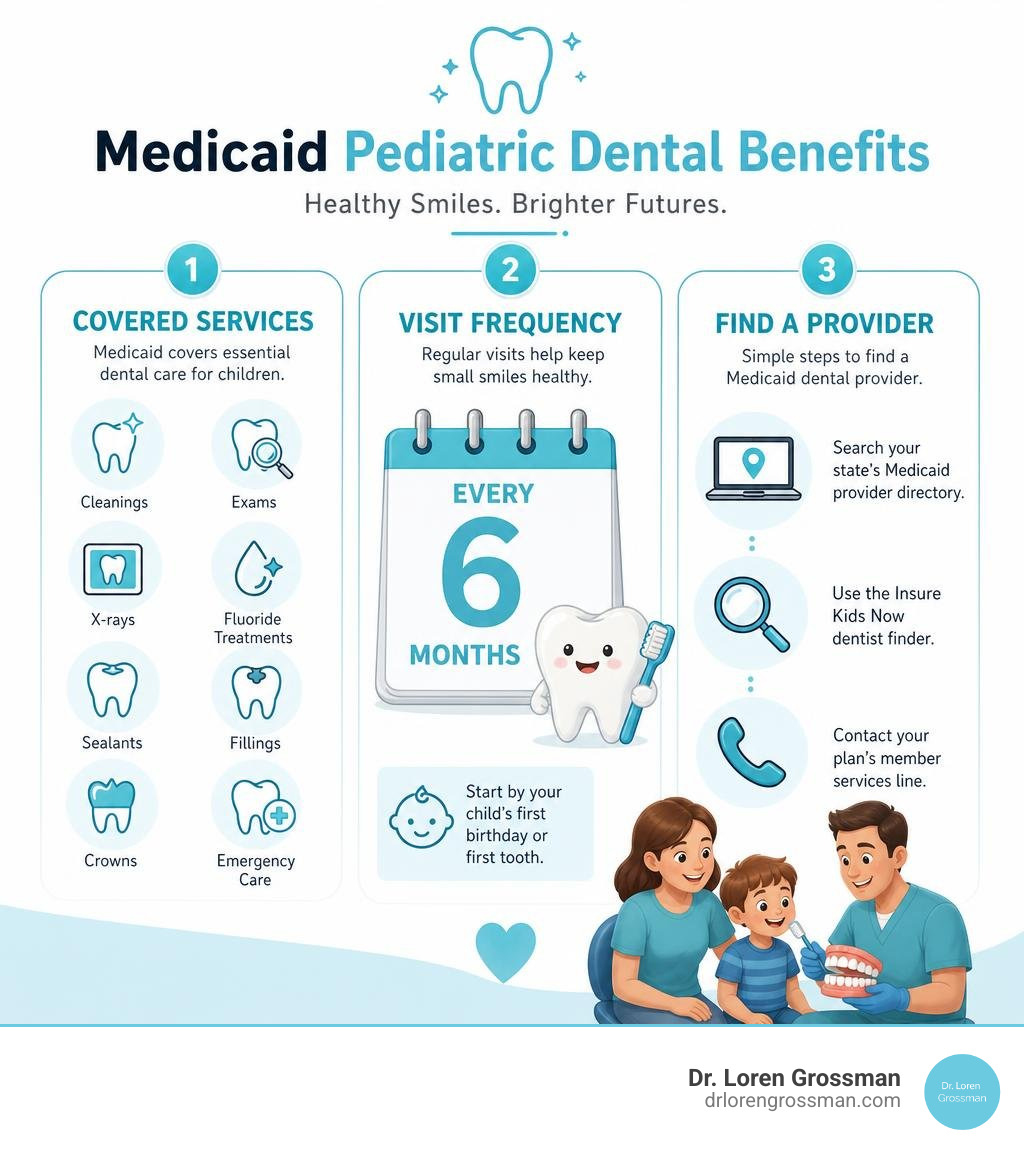
- Who qualifies: All children enrolled in Medicaid or CHIP are entitled to dental benefits under federal law.
- What’s covered: Cleanings, exams, X-rays, fluoride treatments, sealants, fillings, crowns, and emergency care — often at no cost to your family.
- How to find a provider: Use your state’s Medicaid provider directory, the Insure Kids Now dentist finder, or contact your plan’s member services line.
- What to bring: Your child’s Medicaid card and, if available, a photo ID for the parent or guardian.
- How often to go: Every six months for most children, starting by their first birthday or first tooth.
Millions of American families rely on Medicaid to keep their kids’ smiles healthy — and the coverage is far more comprehensive than many parents realize. Under the federal Early and Periodic Screening, Diagnostic and Treatment (EPSDT) benefit, states are required to provide full dental services to every child enrolled in Medicaid, from routine cleanings all the way through restorative treatments. Yet too many families still miss out simply because they don’t know where to start or what they’re entitled to.
This guide will walk you through everything: what Medicaid covers, how to find and verify a quality pediatric dentist near you in Northeastern Pennsylvania, how to prepare for your child’s first visit, and what to know about special care options like sedation dentistry.
I’m Dr. Loren Grossman, D.M.D., a family and cosmetic dentist serving the Wyoming Valley since 1984, and over more than four decades I’ve helped countless families — including children covered by pediatric dental that takes Medicaid programs — access the preventive and restorative care they need to build a lifetime of healthy smiles. Let’s get into what every parent in NEPA should know.
Understanding Benefits: What Does Medicaid Cover for Children’s Oral Health?
When it comes to your child’s teeth, Medicaid doesn’t just offer a bare-minimum safety net. Thanks to a federal mandate known as the Early and Periodic Screening, Diagnostic and Treatment (EPSDT) benefit, children enrolled in Medicaid are guaranteed comprehensive health coverage, and dental care is a major part of that promise.
Under EPSDT, states must provide dental benefits to all eligible children. This means your child is covered for services that relieve pain and infections, restore damaged teeth, and maintain overall dental health.
To help you understand how these benefits break down, we can look at covered services in two main categories: preventive care (keeping the teeth healthy) and restorative/treatment care (fixing problems when they arise).
| Service Category | What It Includes | Frequency / Medicaid Guidelines |
|---|---|---|
| Preventive Services | Routine oral examinations, professional cleanings, and diagnostic X-rays. | Typically covered once every 6 months to catch and prevent issues early. |
| Protective Treatments | Topical fluoride varnishes and dental sealants (thin protective coatings applied to chewing surfaces). | Fluoride is usually covered at every routine visit; sealants are covered for cavity-prone permanent molars. |
| Restorative Care | Composite (tooth-colored) fillings, crowns (including stainless steel crowns for baby teeth), and root canals. | Covered when medically necessary to repair decay, manage infections, or preserve tooth structure. |
| Emergency & Oral Surgery | Emergency exams, pain relief, simple extractions, and treatment for dental trauma. | Covered immediately when a child experiences sudden pain, swelling, or injury. |
Why Finding a Pediatric Dental That Takes Medicaid Matters
Many parents ask us why it is so important to establish a “dental home” early in a child’s life. The truth is that oral health disparities are very real. Children who do not have regular access to dental care are much more likely to experience painful tooth decay, which can lead to missed school days, difficulty eating, and low self-esteem.
Early intervention is the absolute best way to protect your child’s development. Baby teeth might eventually fall out, but they serve as crucial placeholders for permanent teeth, guide jaw development, and play a massive role in how your child learns to speak and chew. Navigating these early years can feel overwhelming, but taking the time to understand your benefits is the first step toward a lifetime of healthy smiles. For a deeper look at managing this process, read our guide on Navigating the Medicaid Maze for Your Child’s Smile.
Covered Services Under Medicaid and CHIP
Under the Children’s Health Insurance Program (CHIP) and Medicaid, coverage is highly focused on prevention. Highly effective, evidence-based treatments like dental sealants and fluoride varnishes are fully covered because they dramatically lower the risk of cavities.
If a cavity does develop, Medicaid covers the treatments needed to fix it. This includes fillings, pulpotomies (often called “baby root canals”), and crowns to keep the tooth functional until it is ready to fall out naturally. You can read more about these federal standards directly through the Dental Care Benefits for Children | Medicaid portal.
For families living right here in Northeastern Pennsylvania, these services are administered locally through the state’s Medical Assistance program. To see the specific guidelines, limitations, and direct resources for our state, you can visit the Medicaid Dental-Services – Commonwealth of Pennsylvania page.
How to Find a Quality Pediatric Dental That Takes Medicaid
Finding a dental office that accepts Medicaid can sometimes feel like searching for a needle in a haystack. Because Medicaid reimbursement rates are often lower than private insurance, not every private dental office participates in the program. However, there are excellent resources available to help you find a great provider near Kingston or anywhere in NEPA.

The best place to start your search is online. The federal government maintains a highly accurate, searchable database designed specifically for parents. By using the Find a Dentist | Insure Kids Now tool, you can filter providers by your location, the specific Medicaid or CHIP plan your child has, and even the language spoken in the office.
Additionally, you can log into Pennsylvania’s COMPASS system or contact your managed care organization (MCO) — such as Geisinger Health Plan, Keystone First, or UPMC For You — to request a localized list of participating pediatric dentists. For a clear, step-by-step approach to narrowing down your options, check out our resource on Finding a Medicaid Dentist: A Step-by-Step Guide.
Tips for Choosing a Pediatric Dental That Takes Medicaid
Once you have a list of potential providers, it is time to choose the right fit for your child. A child’s early experiences at the dentist will shape how they feel about oral healthcare for the rest of their lives.
Here is what we recommend looking for:
- A Child-Friendly Environment: The office should feel welcoming, warm, and non-threatening. Look for offices that use kid-friendly language, have books or toys in the waiting area, and feature staff members who genuinely enjoy working with children.
- Board Certification: Pediatric dentists undergo two to three years of additional specialty training after dental school to learn how to care for growing mouths and manage children’s behavior. Look for a dentist who is board-certified or highly experienced in pediatric care.
- A Patient-Focused Approach: Avoid high-volume “corporate” dental clinics that rush children through appointments like an assembly line. Your child deserves a provider who will take the time to build trust, explain procedures in simple terms, and make them feel safe.
Finding the right setting is essential to prevent dental anxiety before it ever starts. To learn more about why local, personalized care is so important for your family, read our article on Why Choosing the Right Pediatric Dentist in Kingston Matters and discover more tips on how to Smile Bright: How to Find a Pediatric Dentist Accepting Medicaid in Your Area.
Verifying Provider Participation and Medicaid Spending
Before you book an appointment, always call the dental office directly to verify that they currently accept your child’s specific Medicaid plan. Insurance directories can sometimes be outdated, so a quick phone call is the safest way to avoid unexpected out-of-pocket costs.
When you call, have your child’s insurance card handy and ask the receptionist: “Are you currently accepting new pediatric patients under our specific Pennsylvania Medical Assistance plan?” This simple step ensures that your benefits are active and accepted before you walk through the door.
Navigating Appointments and Using Your Medicaid Dental Benefits
Once you have found a provider and confirmed their participation, scheduling and attending the appointment is very straightforward.

When scheduling, let the receptionist know that your child is covered by Medicaid. They will likely pre-verify your active coverage in their system. On the day of the appointment, make sure to bring:
- Your child’s physical Medicaid or CHIP enrollment card.
- A valid photo ID for yourself (as the parent or legal guardian).
- Any medical history records, including a list of current medications or details about pre-existing health conditions.
Preparing for Your Child’s First Visit
Both the American Academy of Pediatric Dentistry (AAPD) and the American Dental Association (ADA) recommend that a child has their first dental visit by their first birthday or within six months of their first tooth erupting.
This very first visit is designed to be quick, gentle, and completely stress-free. It is mostly an opportunity for the dentist to examine your child’s jaw and gums, check for early signs of decay, and talk to you about proper brushing techniques, teething, and nutrition.
To make the visit go smoothly, we recommend:
- Playing “Dentist” at Home: Practice opening wide and counting each other’s teeth with a toothbrush.
- Using Positive Language: Avoid using scary words like “hurt,” “shot,” or “needle.” Instead, talk about how the dentist is going to “count” and “shine” their teeth.
- Scheduling Wisely: Book the appointment at a time when your child is usually well-rested and cooperative, such as early morning, avoiding nap times.
For more practical ways to get your little one ready, read our guide on Pediatric Dentistry: How to Prepare Your Child for Their First Visit to Dr. Loren Grossman and review these helpful Kingston Pediatric Dentistry Tips Parents can use at home.
Sedation Dentistry and Special Needs Care Under Medicaid
For some children, sitting still in a dental chair can be incredibly difficult. This is especially true for very young children who require extensive restorative work, children with severe dental anxiety, or patients with physical, developmental, or cognitive special needs.
In these situations, sedation dentistry is a wonderful tool that keeps children safe, comfortable, and relaxed during their treatment. Common options include:
- Nitrous Oxide (“Laughing Gas”): A mild, safe gas breathed through a small nose mask that helps anxious children feel calm and relaxed while remaining fully awake.
- Oral Conscious Sedation: A liquid medication taken before the appointment that makes the child drowsy and highly relaxed.
- General Anesthesia: Used for complex treatments or highly anxious/medically complex children, allowing them to sleep soundly and painlessly through the entire procedure under the care of an anesthesiologist.
The great news for families is that when sedation or general anesthesia is deemed medically necessary for a child to safely receive dental care, it is typically covered under Medicaid. To explore how we keep anxious kids comfortable and smiling, check out How Children Sedation Dentistry in Kingston Helps Anxious Kids Smile and consult the clinical guidelines provided by the Behavior Guidance and Sedation | American Academy of Pediatric Dentistry.
Frequently Asked Questions about Medicaid Pediatric Dentistry
What dental services are typically covered under Medicaid for children?
Medicaid provides comprehensive dental coverage for children under the EPSDT benefit. This includes essential preventive care (exams, cleanings, X-rays, fluoride, and sealants) as well as restorative treatments (fillings, crowns, root canals, and extractions) and emergency care. You can find a complete, detailed list of covered services on the Medicaid Dental Coverage for Children | HealthCare.gov page.
Are there any out-of-pocket costs for Medicaid pediatric dental visits?
For children enrolled in Medicaid or CHIP, preventive and medically necessary dental care is almost always covered at 100%, meaning there are no copays or out-of-pocket costs for your family. However, rules can vary slightly by state and specific plan types. To learn more about how cost-sharing and copay exemptions work for children’s services, visit the Out-of-Pocket Costs and Cost Sharing | Medicaid resource.
How often can my child see a dentist under Medicaid?
Under standard Medicaid guidelines, children are covered for routine dental checkups and cleanings once every six months. If your child has a higher risk of tooth decay or specific medical conditions, Medicaid may cover more frequent visits if your dentist determines they are medically necessary. You can review the official clinical recommendations on visit frequency in the Periodicity of Basic Pediatric Dental Services | AAPD guidelines.
Conclusion
Your child’s smile is one of their greatest assets, and keeping it healthy shouldn’t have to be a financial burden. Medicaid and CHIP provide incredible, comprehensive dental benefits that make high-quality preventive and restorative care accessible to every eligible child. By establishing a trusted dental home early on, you can protect your child from painful decay, build their confidence, and set them up for a lifetime of excellent oral health.
At the office of Dr. Loren Grossman, we are fully committed to providing compassionate, high-tech, and personalized dental care for families throughout Kingston and the surrounding Northeastern Pennsylvania communities. Whether you are scheduling a baby’s very first visit or looking for a warm, welcoming environment for your growing children, our experienced team is here to help every step of the way.
Ready to give your child a healthy start? Learn more about our gentle, patient-focused approach by visiting our Pediatric Dentistry page, and contact us today to schedule your child’s next visit!