How Long a Dental Crown Lasts — And What It Means for Your Smile
How long a dental crown lasts depends on several factors, but here is the short answer:
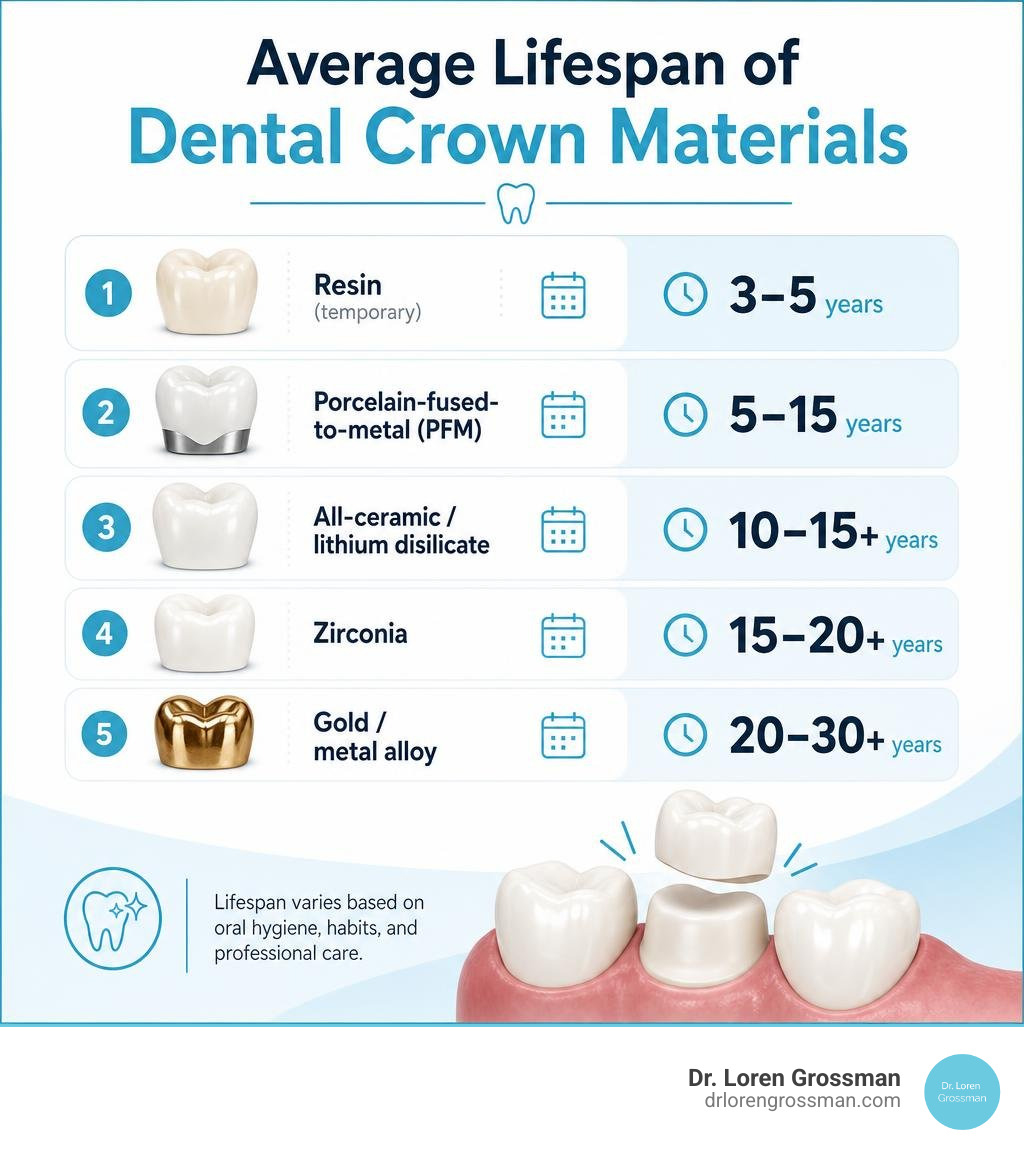
| Crown Material | Average Lifespan |
|---|---|
| Resin (temporary) | 3-5 years |
| Porcelain-fused-to-metal (PFM) | 5-15 years |
| All-ceramic / lithium disilicate | 10-15+ years |
| Zirconia | 15-20+ years |
| Gold / metal alloy | 20-30+ years |
Most dental crowns last 10 to 15 years on average. With excellent care, many last 20 to 30 years — and some last even longer.
Getting a crown is a meaningful investment in your oral health. You deserve to know exactly what to expect from it — and what you can do to protect it.
The reality is that crown lifespan varies a lot. One patient’s crown might hold up for 25 years. Another’s might need replacement in 7 — often due to factors that were entirely preventable. The difference usually comes down to material choice, how well the crown was placed, and daily habits.
I’m Dr. Loren Grossman, a family and cosmetic dentist serving Northeastern Pennsylvania since 1984, and over more than four decades of placing crowns I’ve seen how long a dental crown lasts when patients take the right steps — and when they don’t. In the sections below, I’ll walk you through everything you need to know to get the most out of your crown.
How Long Dental Crown Lasts: Average Lifespan and Material Differences
When we discuss the longevity of a dental restoration, it is helpful to look at both the average clinical survival rates and what is possible with optimal care. According to Cleveland Clinic’s guide on dental crowns, a standard dental crown typically lasts between five and 15 years. However, when we look at long-term clinical data, we see that well-fabricated restorations often far exceed this baseline.
A landmark retrospective study published in the scientific literature provides a clear timeline of how single crowns perform over decades. The cumulative survival rates for single crowns are:
- 89.9% at 5 years
- 80.9% at 10 years
- 70.5% at 15 years
- 61.8% at 20 years
These statistics highlight that while wear and tear occur naturally over time, a significant majority of crowns remain fully functional past the decade mark. The material chosen for your restoration plays a primary role in determining where your crown will fall on this timeline.
| Crown Material | Average Lifespan | Maximum Potential Lifespan | Best Suited For |
|---|---|---|---|
| Composite Resin | 3 to 5 years | 7 years | Temporary protection, budget-conscious situations |
| Porcelain-Fused-to-Metal (PFM) | 10 to 15 years | 20 years | Posterior teeth, dental bridges |
| Lithium Disilicate (E-Max) | 10 to 15 years | 20+ years | Front teeth, high-aesthetic areas |
| Monolithic Zirconia | 15 to 20 years | 25+ years | Molars, patients who grind their teeth |
| Gold & Metal Alloys | 20 to 30 years | 40+ years | Back molars where visibility is low |
How Long Dental Crown Lasts: Zirconia and Ceramic Options
In modern restorative dentistry, ceramic and zirconia options have become incredibly popular due to their ability to mimic the natural translucency of tooth enamel.
Monolithic zirconia is currently one of the strongest non-metallic materials available in dental care. Because it is milled from a single block of solid zirconia, it lacks a separate ceramic veneer layer that could chip off under pressure. With proper oral hygiene and routine dental checkups, a zirconia crown can easily last 15 to 20 years, and often much longer. Furthermore, zirconia is highly biocompatible, gentle on opposing teeth, and less likely to trigger metal allergies.
For teeth that demand the absolute highest level of cosmetic perfection, lithium disilicate (commonly known as E-max) is often the material of choice. As outlined in Healthline’s crown lifespan guide, these highly aesthetic glass-ceramic crowns generally last between 10 and 15 years. They provide an exceptional blend of strength and beauty, making them ideal for the anterior teeth (front teeth) that show when you smile.
How Long Dental Crown Lasts: Metal, PFM, and Gold Alloys
While tooth-colored ceramics dominate cosmetic conversations, traditional metal restorations remain the undisputed champions of pure durability.
Gold alloys and other base metal mixtures have been the “gold standard” of dentistry for more than a century. Gold does not chip, crack, or fracture, and its rate of wear is almost identical to natural tooth enamel, meaning it will not damage the opposing teeth when you chew. It is not uncommon for a gold crown to last 20 to 30 years, and in ideal conditions, they can easily exceed 40 years. The primary drawback is aesthetic, which is why we typically reserve them for non-visible back molars.
Porcelain-fused-to-metal (PFM) crowns represent a hybrid approach. They feature a strong metal interior shell for structural integrity with a layer of porcelain baked over the top for a natural appearance. According to Liv Hospital’s crown timeline, PFM crowns can be expected to last between 10 and 15 years. While the underlying metal structure is incredibly durable, the overlying porcelain can occasionally chip away under heavy chewing forces, exposing the dark metal underneath.
Key Factors That Influence Crown Longevity
The material of your crown is only one piece of the puzzle. How long your restoration remains healthy and functional depends heavily on a combination of professional execution and daily patient habits.

At our Kingston practice, we focus on three critical pillars to maximize crown lifespan:
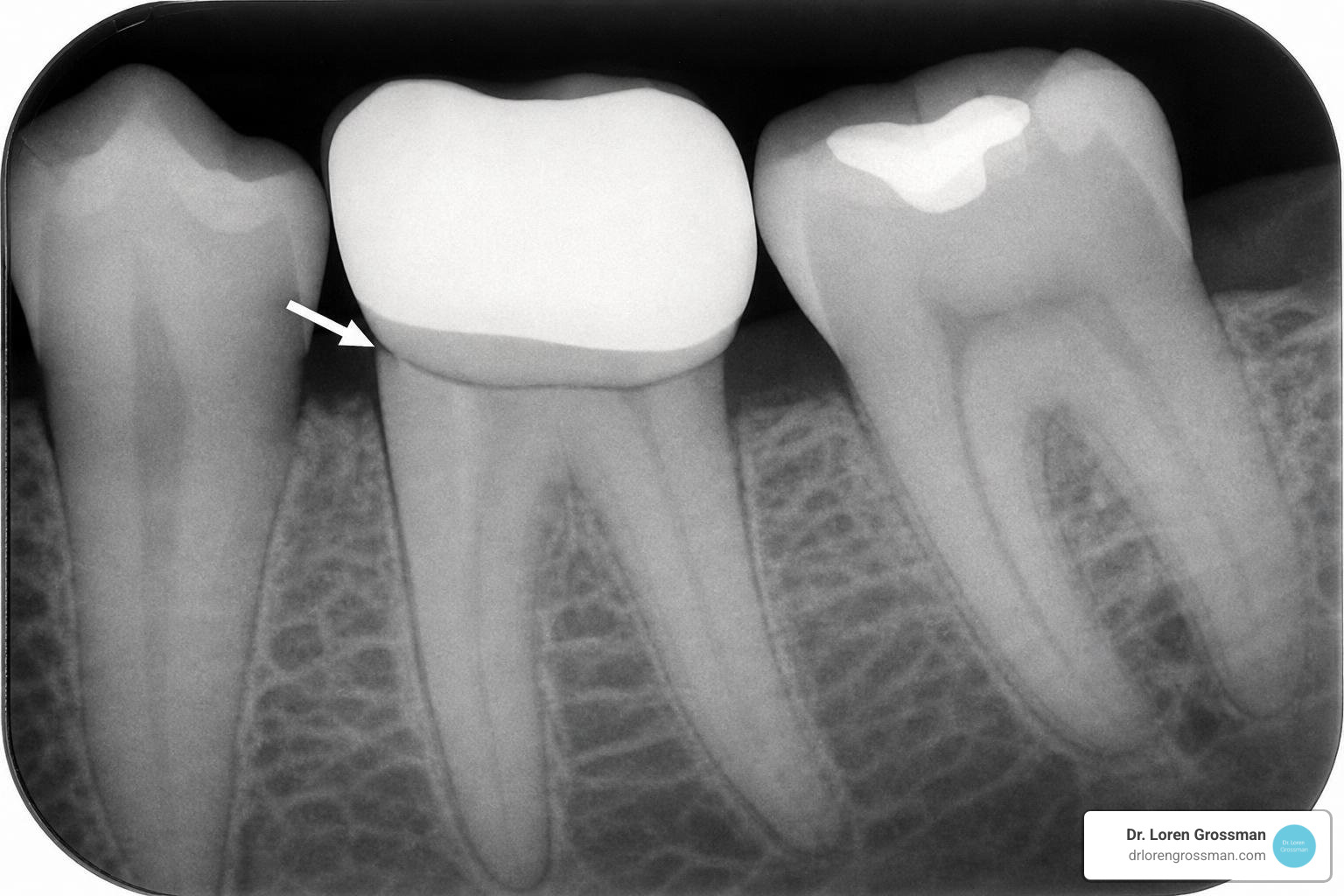
- The Quality of the Fit (The Margin): The most vulnerable part of a crowned tooth is the “margin” — the microscopic line where the bottom of the crown meets your natural tooth. If this fit is not completely flush, bacteria can slip underneath, leading to decay.
- Bite Alignment (Occlusion): If a crown is even a fraction of a millimeter too “high,” it will absorb an unequal amount of force every time you bite down. This localized trauma can lead to microfractures in the ceramic, loose cementation, or pain in the underlying tooth root.
- The Prep Work: Properly shaping the natural tooth to accept the crown is a delicate art. There must be enough natural tooth structure left to support the restoration, a concept we discuss in detail in our Beginner’s Guide to Dental Crowns & Bridges.
Biological vs. Technical Complications
When a crown fails, the cause generally falls into one of two categories: biological or technical. Understanding the difference helps us focus our preventive efforts where they matter most.
According to the PMC retrospective study on single crowns, the most common reasons for crown failure are:
- Loss of Retention (Technical): This occurs when the dental cement bonding the crown to the tooth breaks down, causing the crown to come loose. This accounted for 26.5% of all documented failures in the study.
- Tooth Loss (Biological): Severe decay, periodontal disease, or bone loss around the supporting tooth root, accounting for 13.5% of failures.
- Tooth Fracture (Biological/Technical): The natural tooth structure beneath the crown breaks under pressure, accounting for 12.6% of failures.
Biological complications like recurrent caries (new decay forming at the margin) are highly preventable through meticulous daily flossing and brushing. Technical complications like porcelain chipping or framework fractures are more closely tied to material selection, laboratory fabrication, and bite forces.
Tooth Vitality and Post and Core Support
Whether the underlying tooth is “vital” (alive with a healthy nerve) or “non-vital” (has undergone a root canal) significantly impacts how long a crown will last.
The PMC retrospective study revealed a hazard ratio of 0.64 for vital teeth. In plain English, this means vital teeth have a 36% lower risk of failure compared to non-vital teeth.
Why is this the case?
- Sensory Feedback: The dental pulp inside a vital tooth contains interdental receptors. These tiny sensors act as an early-warning system, alerting your brain when you are biting down too hard on something. Non-vital teeth lack this sensory feedback, making them more susceptible to silent, damaging overload forces.
- Structural Integrity: A root canal procedure requires removing the internal pulp and some dentin, which naturally weakens the tooth structure.
To rebuild a non-vital tooth so it can support a crown, we often perform a “post and core” procedure. A small post is placed down into the root canal space to anchor a composite core, which is then crowned. To prevent fractures, we must ensure there is an adequate ferrule — a continuous band of natural tooth structure wrapping around the base of the prep. This acts like the metal bands on a wooden barrel, preventing the root from splitting under pressure.
The Impact of Bruxism and Bite Force
Bruxism (the chronic grinding or clenching of teeth) is one of the most destructive forces a dental restoration can face. It is estimated that roughly 1 in 4 adults experiences some form of bruxism, often silently during sleep.
According to Willow Family Dentistry’s 2026 crown guide, bruxism significantly increases the risk of crown failure, carrying a hazard ratio of 1.52 (a 52% higher risk of failure compared to non-bruxers). The constant, lateral grinding forces can easily cause:
- Microcracks in ceramic materials
- Rapid wear of composite and porcelain surfaces
- Accelerated breakdown of the dental cement bond
If you have a history of grinding, we strongly recommend a custom-molded night guard. This simple appliance cushions your teeth, absorbs the sleep-induced clenching forces, and can easily add five to ten years to the lifespan of your crown.
Warning Signs and Best Practices for Crown Maintenance
To make sure your investment stands the test of time, you need to know how to care for it and how to spot early signs of trouble.
7 Warning Signs Your Crown May Need Replacement
- A Dark Line at the Gumline: While sometimes this is just the metal framework of a PFM crown showing through as gums naturally recede, it can also indicate that the margin is open and collecting stain or decay.
- Pain on Biting: If it hurts to chew on the crowned tooth, the crown may be sitting too high, the cement may have washed out, or there could be a crack in the root.
- Lingering Temperature Sensitivity: Persistent sensitivity to hot or cold foods suggests that bacteria may have reached the living pulp tissue beneath the crown.
- Visible Chipping or Cracking: Small chips in porcelain can sometimes be smoothed down, but deep cracks compromise the structural integrity of the crown.
- Looseness or Movement: If you feel the crown shift when you press on it or floss, the cement bond has failed.
- Localized Gum Inflammation: Red, swollen, or bleeding gums around the crown suggest that plaque is accumulating along an uneven margin.
- Bite Changes: If your teeth suddenly feel like they do not fit together correctly, the crown may have shifted.
Daily Maintenance Practices
Keeping your crown clean does not require a complex routine, but it does require consistency. We outline several excellent strategies in our guide on the Top Ways to Take Care of Your Dental Crown, which include:
- Brush Gently Along the Margins: Use a soft-bristled toothbrush to clean the area where the crown meets your gumline. This is where plaque loves to hide.
- The “Slide-Out” Flossing Technique: When flossing around a crown, avoid snapping the floss upward, which can catch on the edge of the crown and weaken the cement. Instead, slide the floss down, clean the side of the tooth, and gently pull the floss out sideways.
- Avoid Using Your Teeth as Tools: Never use your teeth (crowned or natural!) to tear open packaging, bite fingernails, or hold hard objects.
- Watch Your Diet: Minimize sticky candies (like taffy or caramel) and exceptionally hard foods (like ice cubes or unpopped popcorn kernels) that can pull at or fracture your restorations.
Frequently Asked Questions about Dental Crown Lifespan
Do dental crowns last forever?
No, dental crowns are generally not considered permanent, “forever” solutions. While they are incredibly durable and can last upwards of 30 years with exceptional oral hygiene and professional care, they are subject to constant mechanical stress, temperature changes, and bacterial exposure. Eventually, natural wear, gum recession, or changes in your bite may require a replacement.
Do crowns on back teeth last as long as front teeth?
Generally, crowns on front teeth (anterior) tend to have slightly longer survival rates than crowns on back teeth (posterior) due to the differing forces they experience.
- Back Teeth (Molars): These teeth bear the brunt of your chewing pressure, absorbing hundreds of pounds of force daily. Consequently, molar crowns are more prone to technical wear and require stronger materials like zirconia or gold.
- Front Teeth (Anterior): While they experience less direct vertical chewing force, they are more frequently restored using post and core systems due to trauma, which can introduce different structural risks over time.
Does dental insurance cover crown replacement?
Most dental insurance policies do cover crown replacements, but they usually enforce what is known as the 5 to 8 year rule. This means the insurance provider will not pay for a replacement crown on the same tooth unless the existing crown has been in place for at least five to eight years. If a crown fails prematurely due to poor hygiene or structural damage before this window closes, you may have to pay out-of-pocket. We always recommend checking with your specific provider to understand your restorative benefits.
Conclusion
A dental crown is an exceptional tool for restoring both the strength and beauty of a damaged tooth. Whether your crown lasts ten years or forty years depends heavily on the materials you choose, the skill of the dentist placing it, and the care you provide at home.
At the office of Dr. Loren Grossman, we have spent decades providing top-tier cosmetic and general dentistry to patients throughout Kingston, Pennsylvania, and the surrounding Northeastern Pennsylvania communities. By combining advanced clinical technology, meticulous attention to detail, and a warm, patient-focused approach, we ensure your restorations look natural, feel comfortable, and are built to last.
If you suspect your current crown is failing, or if you want to explore your options for a beautiful, long-lasting smile transformation, we are here to help. Contact our team today to schedule your consultation and explore our Services: Crowns & Bridges.