Missing a Tooth in Pennsylvania? Here’s What You Need to Know
If you’re looking for a dental bridge for a missing tooth in PA, here’s a quick summary:
- What it is: A dental bridge is a fixed restoration that fills the gap left by a missing tooth using a false tooth (pontic) held in place by crowns on the teeth on either side.
- Cost: The average cost in Pennsylvania runs around $5,050 for a traditional three-unit bridge, though insurance can cover 50–80% of that.
- How long it takes: Usually 2–3 visits over a few weeks.
- How long it lasts: Typically 5–15 years with proper care.
- Best for: Patients with one or more missing teeth who have healthy adjacent teeth and want a non-surgical, fixed solution.
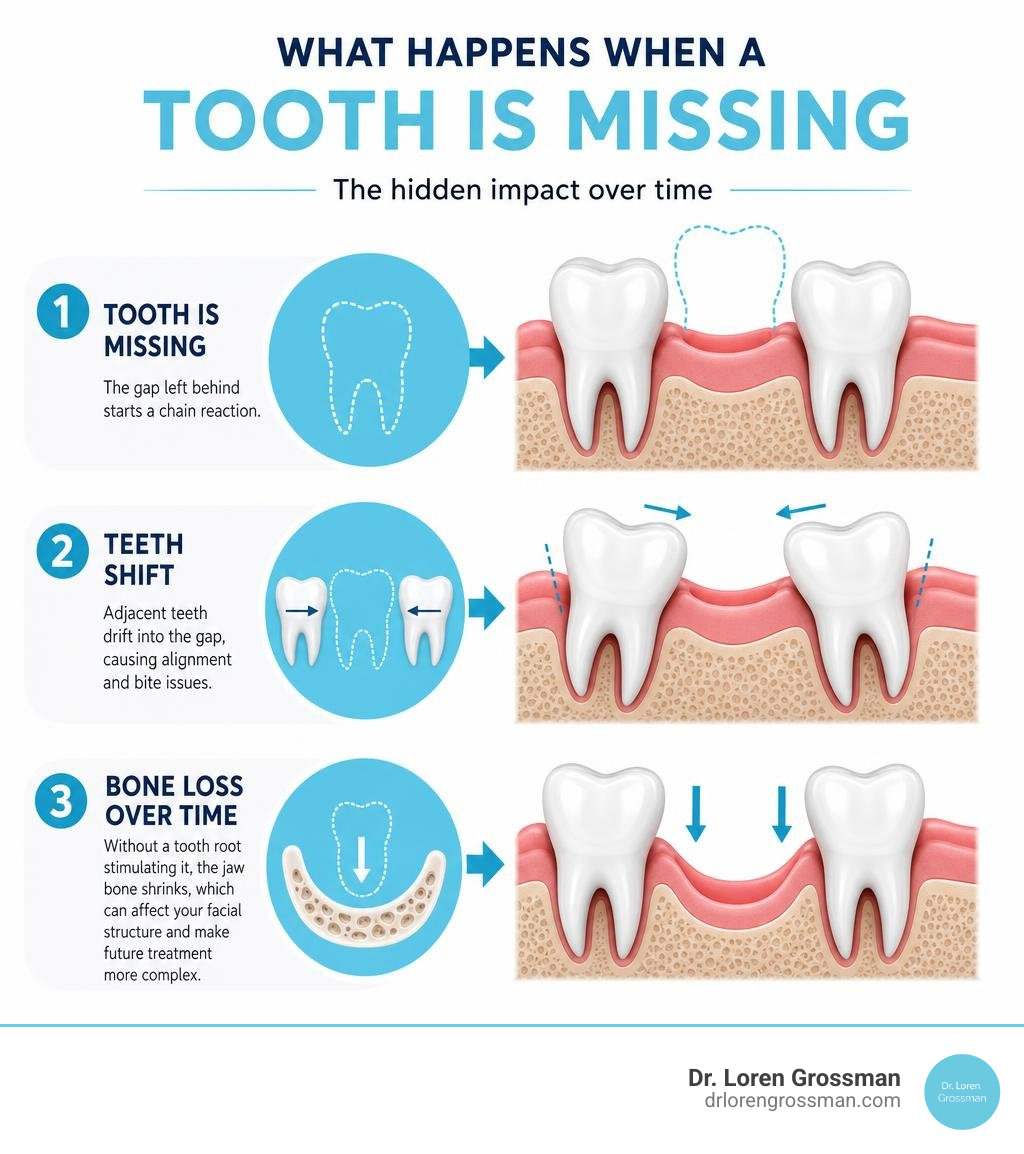
Losing a tooth does more than change how your smile looks. It can make chewing harder, affect how you speak, and over time cause the surrounding teeth to drift out of position. Left untreated, a single missing tooth can quietly create bigger problems — shifting bite alignment, bone loss in the jaw, and changes to your facial shape.
The good news? A dental bridge is one of the most proven, accessible ways to restore your smile — and it doesn’t require surgery.
I’m Dr. Loren Grossman, D.M.D., a cosmetic and family dentist serving Northeastern Pennsylvania since 1984, and placing dental bridges for missing teeth in PA is one of the core restorative treatments I perform personally at my practice. In the sections below, I’ll walk you through everything you need to know — from bridge types and costs to how they compare with implants.
What is a Dental Bridge and How Does It Work?
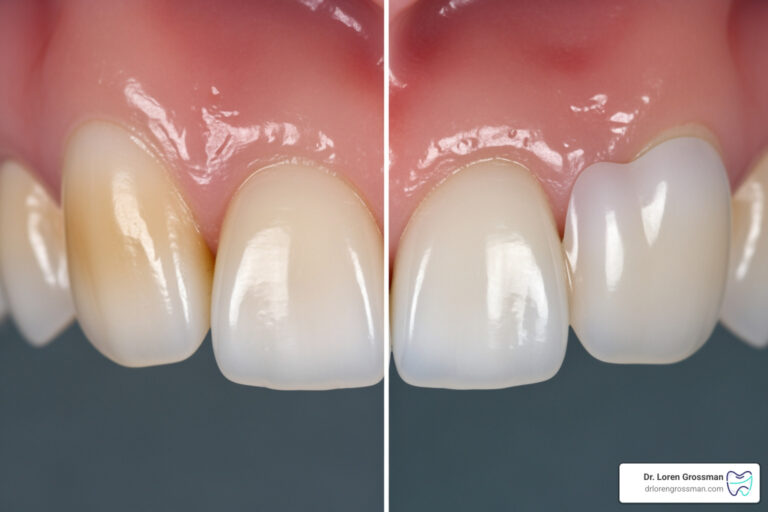
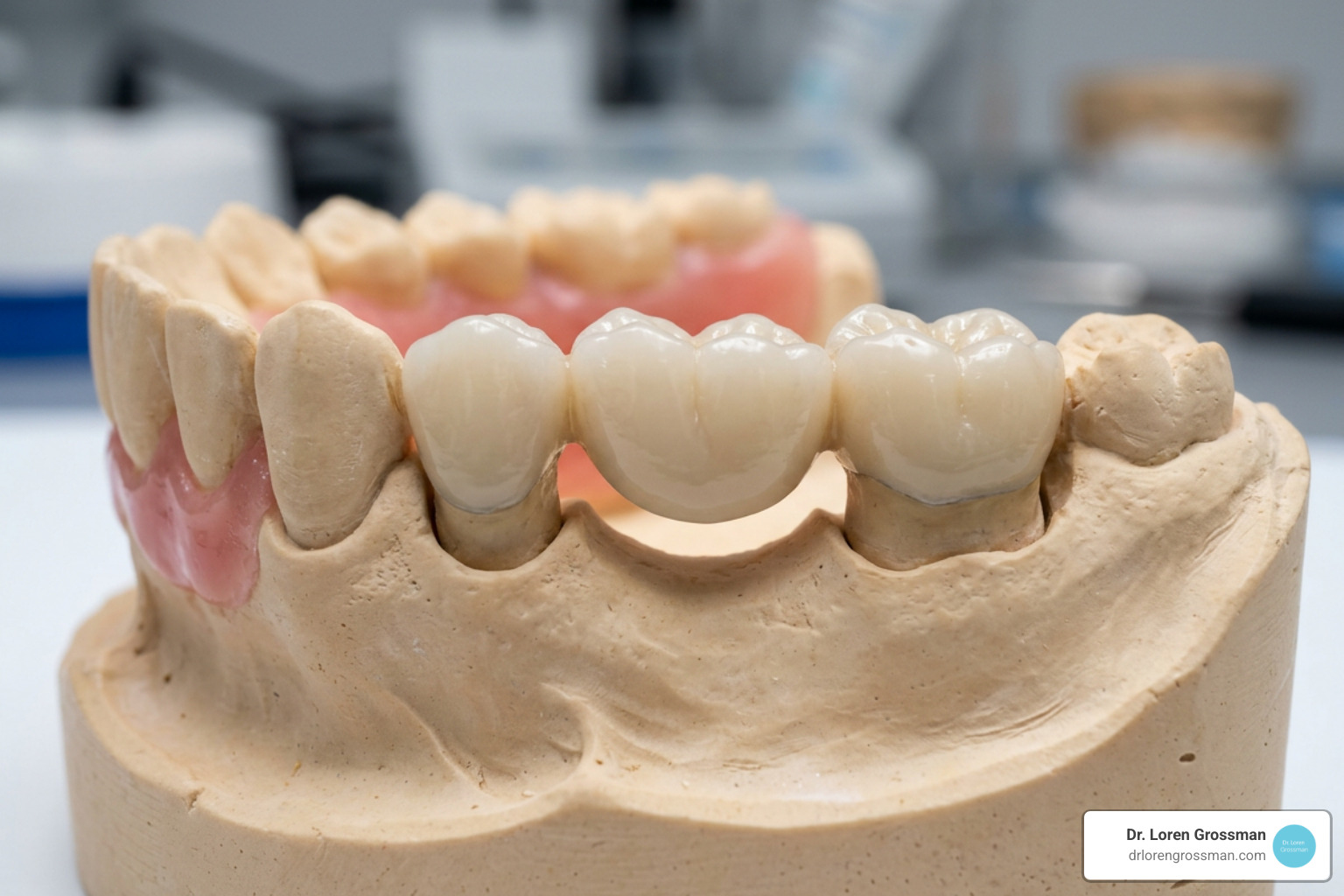
At its core, a dental bridge is exactly what it sounds like: a custom-designed prosthetic that literally “bridges” the gap left by one or more missing teeth. It is a time-tested restorative solution that stays permanently in your mouth, meaning you do not have to take it out at night or soak it in a glass on your nightstand.
A standard dental bridge consists of two main components:
- The Pontic: This is the artificial, custom-sculpted tooth (or teeth) that sits directly in the space where your natural tooth used to be.
- The Abutment Teeth: These are the healthy anchor teeth on either side of the empty space. To secure the bridge, these anchor teeth are fitted with custom dental crowns.
When we secure a bridge in place, the crowns on the abutment teeth act as sturdy pillars, suspending the pontic firmly over your gums.
Why is getting a dental bridge for a missing tooth in PA so important? Aside from the obvious cosmetic upgrade, leaving an empty space in your mouth triggers a cascade of unwanted dental issues. Your teeth work as a team. When one member of the team goes missing, the remaining teeth will naturally begin to shift, tip, and slide into the open space. This shifting can ruin your bite alignment, make chewing uncomfortable, cause jaw pain, and make it much harder to clean your teeth properly, increasing your risk of gum disease.
By filling the gap, a bridge acts as a space maintainer, keeping your remaining teeth perfectly in place and distributing the forces of your bite evenly. If you want to learn more about how dental crowns and bridges work together to protect your oral health, check out our Beginner’s Guide to Dental Crowns & Bridges.
Types of Dental Bridges Available in Pennsylvania
Modern dental technology has come a long way. Gone are the days when dental restorations looked obvious or felt bulky. Today, we utilize cutting-edge restorative dentistry options and state-of-the-art materials to craft custom bridges that blend seamlessly with the rest of your natural smile.
When designing your bridge, we select materials based on where the missing tooth is located, your bite force, and your aesthetic goals. The primary materials used include:
- Porcelain: Highly aesthetic and stain-resistant, porcelain is excellent for front teeth because it mimics the natural translucent quality of tooth enamel.
- Zirconia: Known as “ceramic steel,” zirconia is incredibly strong and virtually indestructible. It is an outstanding choice for back teeth (molars) that undergo heavy chewing forces.
- Porcelain-Fused-to-Metal (PFM): This material combines the strength of a metal interior structure with a beautiful porcelain outer shell, offering a balanced mix of durability and aesthetics.
Depending on your unique clinical situation, we will recommend one of four primary types of dental bridges.
Traditional and Cantilever Bridges
A traditional dental bridge is the most common type used in dentistry. It requires healthy natural teeth on both sides of the gap. During the preparation phase, we gently reshape the enamel of these adjacent abutment teeth to make room for the supporting dental crowns. Once the crowns are cemented onto the prepared teeth, the pontic is held securely in the middle.
A cantilever bridge is very similar to a traditional bridge, but with one major difference: the pontic is supported by a crown on only one side. This option is used when there is only one healthy anchor tooth next to the empty space. Because cantilever bridges place a high amount of leverage and stress on a single anchor tooth, we use them very selectively — typically only for single missing teeth near the front of the mouth where chewing forces are lighter.
Maryland and Implant-Supported Bridges
If you are looking for a more conservative option that preserves your natural tooth structure, a Maryland bridge (also known as a resin-bonded bridge) might be the answer. Instead of using dental crowns that require us to shave down your adjacent teeth, a Maryland bridge uses a pontic with thin metal or porcelain “wings.” These wings are bonded directly to the back surfaces of your neighboring teeth. Because it requires minimal preparation and leaves your natural enamel intact, it is a highly conservative option often used for front teeth.
An implant-supported bridge is the ultimate heavy-duty solution, especially if you are missing multiple teeth in a row. Instead of relying on your natural teeth for support, this bridge is anchored by titanium posts surgically placed into your jawbone. Over a period of several months, these posts undergo a natural process called osseointegration, where the bone fuses directly to the titanium, creating an incredibly strong foundation. Once healed, we attach custom implant-supported restorations to the posts, giving you unmatched stability without having to alter any of your remaining natural teeth.
Choosing the Right Dental Bridge for Missing Tooth PA
There is no one-size-fits-all answer when it comes to replacing a missing tooth. Choosing the right dental bridge for a missing tooth in PA requires a comprehensive oral health evaluation at our Kingston office. During your consultation, we will assess:
- The health and strength of your adjacent teeth.
- Your jawbone density (especially if considering implant-supported options).
- Your lifestyle needs, such as whether you participate in high-impact contact sports.
- Your long-term aesthetic goals and budget.
To explore all of our restorative and cosmetic options, you can view our full range of Services.
The Cost of a Dental Bridge for Missing Tooth PA
Let’s talk about the numbers. When considering a restorative dental procedure, understanding the financial investment is essential.
In Pennsylvania, the average cost for a traditional three-unit dental bridge (which replaces one missing tooth using two crowns on either side) is approximately $5,050. Depending on the complexity of your case, the materials selected, and your specific oral health needs, the price of a traditional bridge generally ranges between $4,100 and $9,650.
If you are seeing an out-of-network dentist, the average out-of-network cost for a three-unit dental bridge is approximately $3,965. However, visiting an in-network provider can significantly lower your out-of-pocket expenses. For a deep dive into the financial aspects of this restoration, read The Ultimate Guide to Permanent Dental Bridge Costs.
Factors Influencing the Price of a Dental Bridge for Missing Tooth PA
The total cost of your dental bridge isn’t a random number; it is influenced by several distinct factors:
- Number of Units: A bridge is priced by the “unit” (each crown and each pontic counts as one unit). Replacing a single tooth requires a three-unit bridge. Replacing two teeth in a row requires a four-unit bridge, which naturally increases the price.
- Material Selection: High-strength zirconia and advanced all-ceramic materials generally cost more than porcelain-fused-to-metal (PFM) restorations due to the advanced technology required to fabricate them.
- Geographic Location: Dental fees vary by region. Restorative care in Northeastern Pennsylvania (like our Kingston practice) is often more cost-effective than in major metropolitan hubs like Philadelphia or Pittsburgh.
- Preparatory Procedures: If the anchor teeth need root canals, fillings, or gum treatments before the bridge can be placed, these procedures will add to the overall treatment cost.
- Dental Insurance Coverage: Most dental insurance plans in PA view dental bridges as a major restorative procedure. Premier plans, such as Delta Dental, typically cover 50% to 80% of the total cost of a dental bridge after your deductible has been met.
Dental Bridge vs. Dental Implant: Longevity and Value
When patients visit our Kingston, PA office to replace a missing tooth, the most common question they ask is: “Should I get a dental bridge or a dental implant?” It is a classic clinical showdown, and both options have incredible benefits.
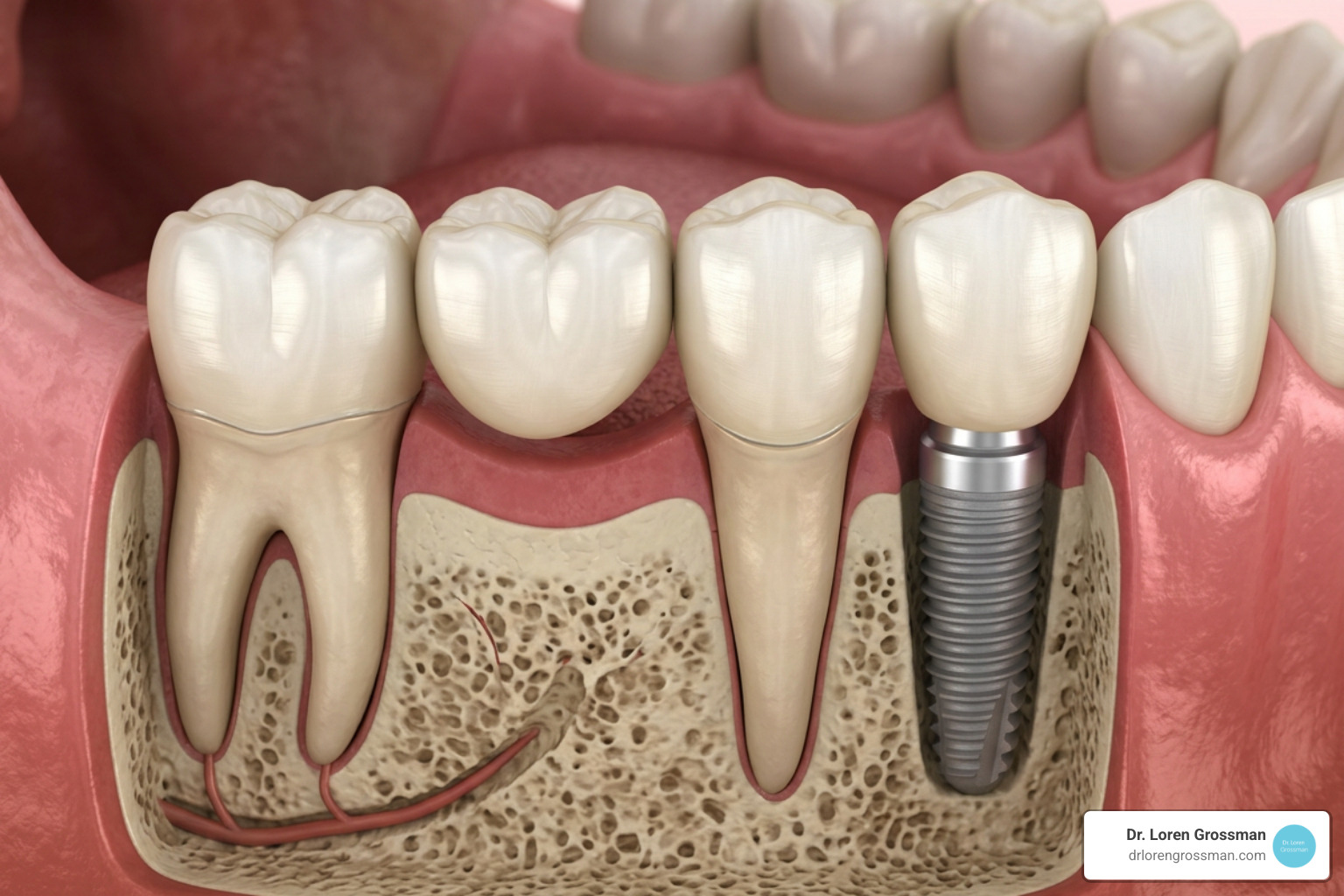
The primary clinical difference lies beneath the gumline. A dental bridge sits on top of your gums and relies on surrounding teeth for support. A dental implant, however, replaces both the visible crown and the invisible root of the tooth. By placing a titanium post directly into the jawbone, an implant provides natural jaw stimulation, which actively prevents the bone loss that naturally occurs after a tooth is extracted.
To help you weigh your options, here is a direct comparison of the two treatments:
| Feature | Dental Bridge | Dental Implant |
|---|---|---|
| Upfront Cost | Moderate (More affordable initially) | Higher upfront investment |
| Treatment Time | 2 to 3 weeks (Quick results) | 3 to 6 months (Requires healing time) |
| Invasiveness | Non-surgical (Reshapes adjacent teeth) | Surgical placement of titanium post |
| Bone Preservation | Does not prevent bone loss | Stimulates bone, preventing shrinkage |
| Longevity | 5 to 15 years (Requires replacement) | Can last a lifetime with proper care |
Both treatments are outstanding, but the right choice depends on your health, your timeline, and your budget. For an in-depth comparison to help you choose, read our clinical guide, The Ultimate Showdown: Dental Bridge or Implant?.
Lifespan and Maintenance Comparison
While a dental implant is designed to be a permanent, lifetime solution, a dental bridge has a more limited lifespan. On average, dental bridges last between 5 and 15 years. With meticulous oral hygiene and regular dental checkups, it is not uncommon for a high-quality bridge to last even longer. However, because the bridge is suspended over the gums, it creates a small space underneath the pontic where food particles and plaque love to hide.
To keep your bridge in tip-top shape and protect the anchor teeth from decay, you must practice excellent home care:
- Brush twice daily with a soft-bristled toothbrush and non-abrasive fluoride toothpaste.
- Use floss threaders or specialized interdental brushes to slide dental floss underneath the pontic to clear away trapped plaque.
- Rinse with an antimicrobial mouthwash to keep the gum tissue around the bridge healthy.
- Avoid chewing on hard objects (like ice, hard candy, or pens) to prevent chipping the porcelain.
If you are curious about how dental implants achieve their incredible lifetime durability, take a look at Dental Implants from Science to Smile.
Frequently Asked Questions About Dental Bridges
We understand that committing to dental work can bring up a lot of questions. Here are the honest, clinical answers to the questions we hear most often from our patients in Kingston.
Does getting a dental bridge hurt?
Not at all! We prioritize your comfort above everything else. During the tooth preparation phase, we use local anesthesia to completely numb the teeth and surrounding gums, ensuring you won’t feel a thing.
After the anesthesia wears off, you might experience some mild sensitivity or soreness in your gums for a few days, which is completely normal. This minor discomfort can easily be managed with over-the-counter pain relievers like ibuprofen.
How long does the dental bridge procedure take?
The entire process is incredibly efficient and is typically completed in just two visits spread over two to three weeks:
- First Visit (Preparation & Impressions): We numb the area, gently shape the anchor teeth, take highly accurate digital impressions, and place a customized temporary bridge to protect your teeth.
- Fabrication: We send your impressions to a specialized dental laboratory, where expert technicians custom-craft your permanent bridge to match the exact shade and shape of your natural teeth.
- Second Visit (Fitting & Cementation): We remove your temporary bridge, try on the permanent one, make any necessary adjustments to ensure your bite is absolutely perfect, and permanently cement it into place.
Can a dental bridge be replaced with an implant later?
Yes, absolutely! If you choose a dental bridge now but decide you want a more permanent implant solution down the road, we can make that transition.
That because a bridge does not stimulate the jawbone, some bone shrinkage will occur over the years in the area of the missing tooth. When transitioning to an implant later, you may need a simple bone graft first to rebuild the bone density required to support the titanium post. If you want to learn more about the step-by-step implant process, read our A-Z Guide to Dental Implants.
Conclusion
At the practice of Dr. Loren Grossman, we believe that a healthy, complete smile is one of your greatest assets. It affects how you eat, how you speak, and how you carry yourself every single day. If you are living with a missing tooth, you don’t have to navigate the discomfort or self-consciousness any longer.
Whether a traditional dental bridge, a conservative Maryland bridge, or an implant-supported restoration is the right fit for your lifestyle, we are here to provide personalized, gentle, and top-tier restorative dentistry in Kingston, Pennsylvania. We combine decades of clinical expertise with advanced dental technology to deliver beautiful, natural-looking results that stand the test of time.
Ready to reclaim your smile and your confidence? Schedule a consultation with us today to explore your options for a custom dental bridge!