Can Veneers Really Close the Gap in Your Smile?
Veneers for gaps in teeth are one of the fastest and most effective cosmetic solutions available today — and yes, they work.
Here’s the quick answer:
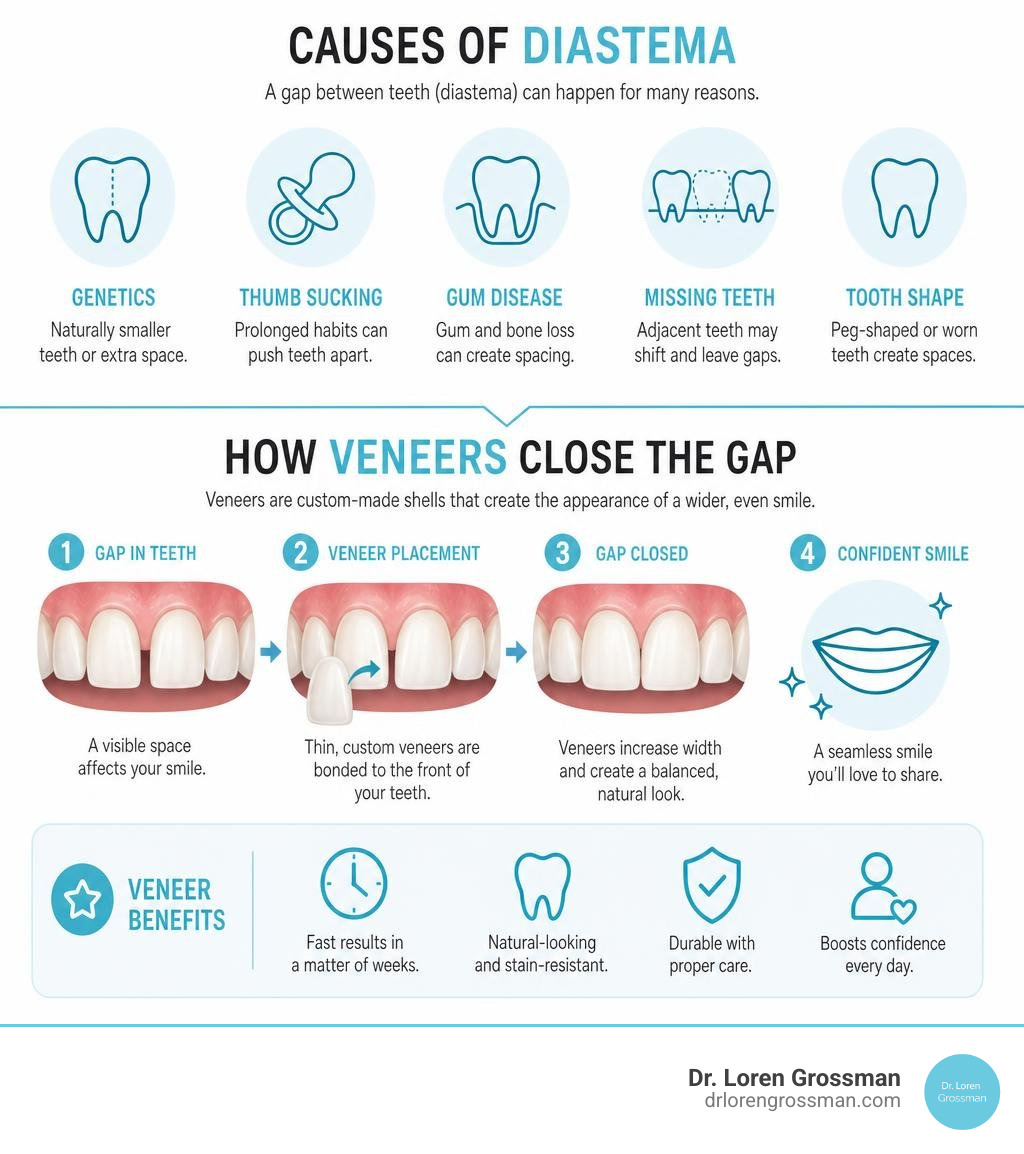
- What they do: Veneers are thin, custom-made shells bonded to the front of your teeth, making them appear wider and closing the visible gap.
- Best for: Small to moderate gaps, typically 1–3mm wide.
- How fast: Results in a matter of weeks — not the months or years that braces require.
- How many: As few as 2 veneers for a single front gap, or more if spacing is widespread.
- Limitations: Very large gaps, active gum disease, or bite alignment problems may require a different approach first.
Gaps between teeth — medically called diastema — are incredibly common. They can appear between the front teeth, develop gradually with age, or result from missing or undersized teeth. For many people in Northeastern Pennsylvania, that gap is a quiet source of daily self-consciousness. It shows up in photos, in conversations, and in the mirror every morning.
The good news? Modern cosmetic dentistry has made closing those gaps faster, more natural-looking, and more accessible than ever before.
I’m Dr. Loren Grossman, a cosmetic and family dentist serving the Wyoming Valley since 1984, and veneers for gaps in teeth are one of the smile transformations I find most rewarding — the results can be dramatic, and the process is simpler than most patients expect. In this guide, I’ll walk you through everything you need to know to decide if veneers are the right choice for your smile.
Simple veneers for gaps in teeth glossary:
Understanding Diastema: What Causes Gaps in Teeth?
Before we talk about how to fix a gap, it helps to understand why it is there in the first place. Spacing issues, known clinically as diastemas), do not just happen by accident. They are the result of specific biological, genetic, or behavioral factors.
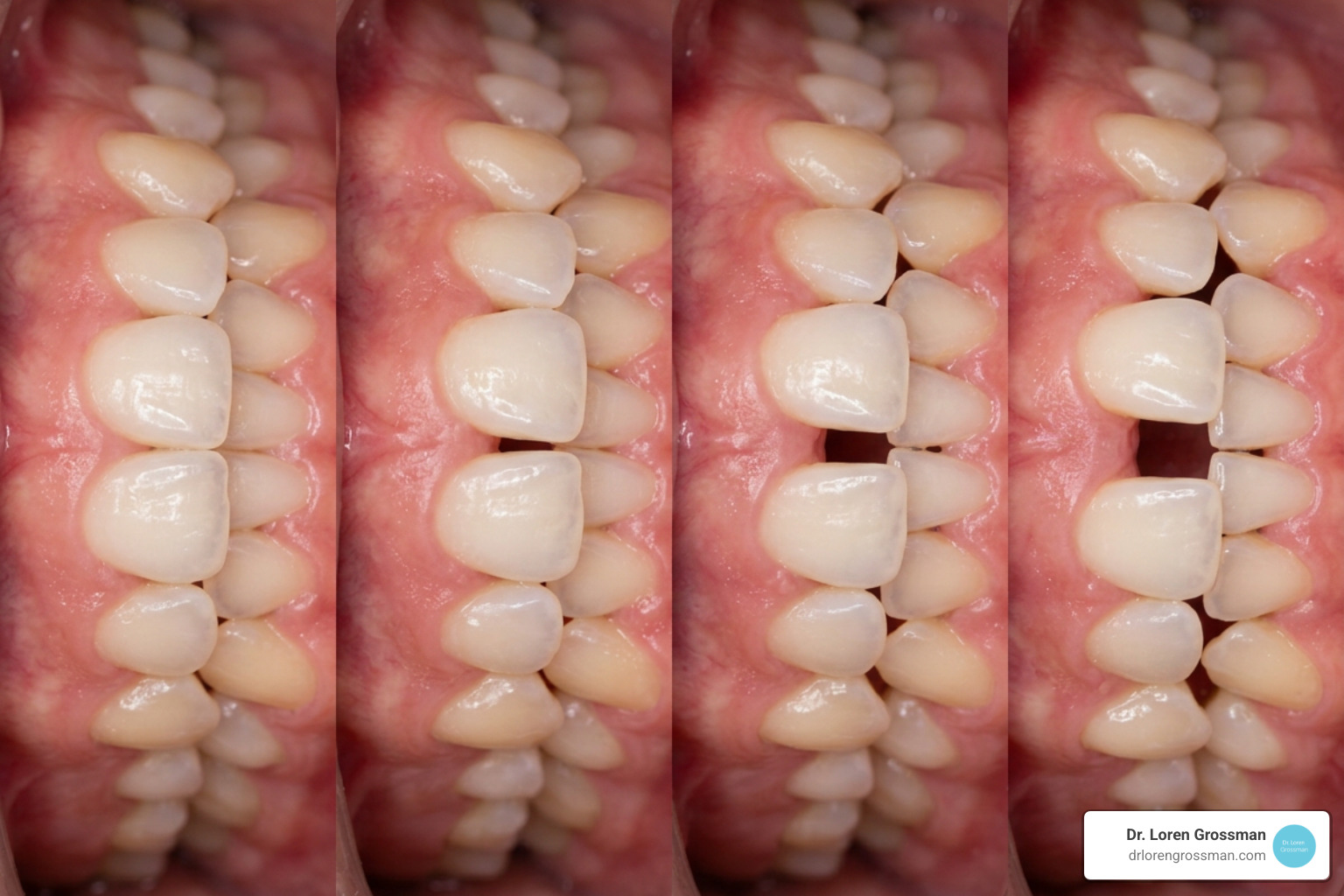
When we evaluate patients at our Kingston, PA office, we generally find that gaps are caused by one (or a combination) of the following:
- Genetics and Jaw Mismatch: Sometimes, you simply inherit a larger jaw bone and smaller teeth. When your jaw is spacious but your teeth are narrow, spaces naturally form between them.
- Oversized Labial Frenum: The labial frenum is the small tissue membrane that connects the inside of your upper lip to your gums, right above your two front teeth. If this tissue is oversized or attaches too low, it can physically block the front teeth from coming together, forcing a gap to remain open.
- Childhood Habits: Habits like thumb-sucking or “tongue thrusting” (pushing the tongue forward against the front teeth when swallowing) apply continuous pressure. Over time, this pressure pushes the front teeth forward and outward, creating noticeable gaps.
- Natural Shifting with Age: Spacing is not always a permanent fixture from childhood. Research indicates that at least 90% of adult patients will experience some shifting in their teeth positions between the ages of 20 and 50. What was once a perfectly aligned smile in your teens can slowly develop spaces as the years go by.
- Gum Disease (Periodontitis): Advanced gum disease damages the bone and supportive tissues holding your teeth in place. As the foundation weakens, teeth can begin to drift, spread, and form new gaps.
- Missing or Undersized Teeth: It is very common for people to have naturally “peg-shaped” lateral incisors (the teeth next to your front teeth) or to be missing them entirely. This leaves excess room in the arch, causing the remaining teeth to spread out.
Understanding the root cause is essential because it dictates our treatment path. For example, if your gap is caused by active periodontal disease, we must treat and stabilize your gums before performing any cosmetic upgrades. If you would like to explore the full range of ways we restore oral health, check out this More info about cosmetic dentistry services.
Why Choose Veneers for Gaps in Teeth?
When patients ask us how to fix their spaced teeth, they often assume their only choices are years of metal braces or living with the gap. That is where veneers for gaps in teeth come in as a highly attractive alternative.
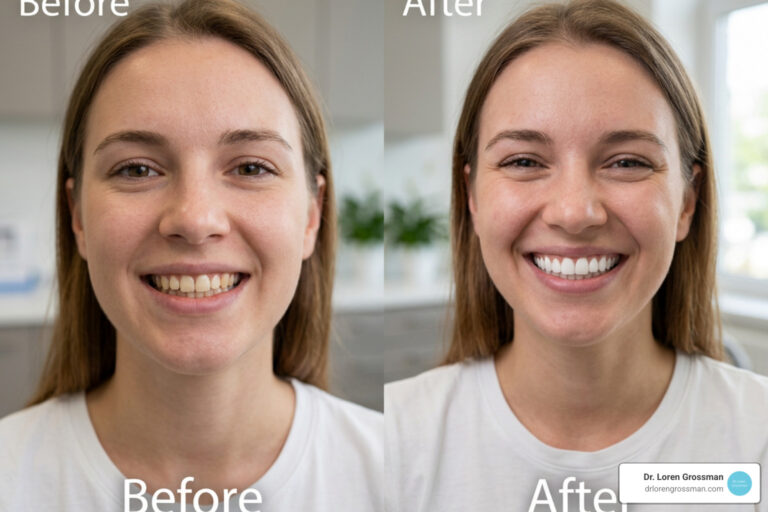
Often referred to in cosmetic dentistry as “instant orthodontics,” veneers do not actually move your teeth. Instead, they visually close the gaps by redesigning the visible front surfaces. By custom-crafting porcelain shells that are slightly wider than your natural teeth, we can close those annoying spaces in a fraction of the time.
Here are the primary reasons why veneers have become a premier choice for gap correction:
- Incredible Treatment Speed: While traditional braces or clear aligners can take anywhere from six months to two years to close gaps, veneers can completely transform your smile in just a matter of weeks.
- Comprehensive Aesthetic Upgrades: Orthodontics can align your teeth, but they cannot change their color, shape, or size. If your teeth are small, chipped, or permanently stained, clear aligners will just give you straight, small, stained teeth. Veneers address the gap, the color, and the shape all at once.
- Stain Resistance: High-quality dental porcelain is highly glass-like and smooth, making it incredibly resistant to stains from coffee, tea, red wine, and blueberries.
- Exceptional Durability: Unlike dental bonding, which can chip or wear down within a few years, modern porcelain veneers are built to last. With proper care, they are a long-term investment in your self-confidence.
To see how veneers can completely redefine your smile, read our Transform Your Smile with Dental Veneers: A Comprehensive Guide.
Are Veneers for Gaps in Teeth Suitable for Everyone?
While veneers are a fantastic cosmetic tool, they are not a magic wand for every single spacing issue. A responsible cosmetic dentist will evaluate the physical limitations of your teeth and bite before recommending them.
The most critical factor is the size of the gap. Veneers can easily and safely close gaps between 1mm and 3mm. If a gap is wider than 3mm, trying to close it with veneers alone can be risky. Because veneers require a minimum amount of natural tooth surface to adhere to, a massive gap means the porcelain must stretch far beyond the edge of the tooth. Without adequate physical support from the underlying tooth structure, the veneer is highly prone to breaking under normal biting forces.
Furthermore, trying to close a very large gap with veneers can compromise your smile’s proportions. If we make two front teeth wide enough to close a 5mm gap, those teeth will look unnaturally wide, bulky, and heavy — giving you what some call a “rabbit” or “copy-paste” smile.
Other reasons why veneers might not be the ideal primary treatment include:
- Severe Bite Misalignment: If your teeth do not meet correctly, or if you have a severe underbite or crossbite, the heavy forces of your bite may crack the veneers.
- Bruxism (Teeth Grinding): Constant clenching and grinding will eventually fracture or pop off porcelain restorations.
- Active Decay or Gum Disease: We must build your new smile on a healthy foundation. All decay and gum infections must be fully resolved first.
If you are curious about what else to watch out for, read about Veneers Side Effects and Risks You Need to Know Before You Go.
How Many Veneers Are Needed to Close Gaps?
One of the most common questions we hear in Kingston, PA is: “Can you just put a single veneer on one tooth to close my gap?”
The short answer is almost always no.
To maintain symmetry and balance, we must design your smile in pairs. If you have a single central diastema (a gap right between your two front teeth) and we only place a veneer on one of them, that single tooth will look significantly wider than its neighbor. Your smile will look lopsided. By placing at least two veneers — one on each of the central incisors — we can split the difference, widening both teeth slightly so they look perfectly proportioned and symmetrical.
Depending on your unique spacing and your cosmetic goals, we typically recommend:
- Two Veneers: Perfect for a single, moderate midline gap when the surrounding teeth are already the correct shape, color, and size.
- Four to Eight Veneers: Recommended if you have widespread, uneven spacing across your entire “smile zone” (the teeth that show when you smile). Treating the front four to eight teeth allows us to distribute the spacing evenly, ensuring natural proportions and a seamless blend with your back teeth.
To see real-world examples of how we plan these numbers for maximum visual harmony, explore our guide on From Gaps to Glam with Incredible Veneers Before and After Transformations.
Comparing Gap-Closing Treatments
If you are trying to decide how to close your teeth gaps, it is helpful to look at all your choices side-by-side. Every treatment has its own balance of speed, cost, and longevity.
| Feature | Porcelain Veneers | Composite Bonding | Clear Aligners (Invisalign) |
|---|---|---|---|
| Treatment Speed | 2 to 3 weeks | Single visit (1-2 hours) | 6 to 18 months |
| Average Lifespan | 10 to 15+ years | 4 to 7 years | Lifetime (with retainers) |
| Invasiveness | Minimally invasive (0.5mm enamel prep) | Non-invasive (no enamel removal) | Non-invasive (moves natural teeth) |
| Stain Resistance | Extremely high | Moderate (prone to staining) | High (natural teeth can stain) |
| Best For | Small-moderate gaps + shape/color issues | Very small, minor gaps | Moderate-severe spacing & bite issues |
| Cost Tier | Higher upfront investment | Budget-friendly | Moderate to high |
While composite bonding is a fantastic, conservative option for a quick fix, it does not offer the same lifelike light-reflecting properties or longevity as porcelain. On the other hand, clear aligners are ideal if your teeth are completely healthy and you simply want to move them without altering their natural shape.
Sometimes, we even recommend a hybrid approach: using clear aligners first to narrow a very large gap, and then finishing with veneers to refine the shape and color of the teeth. To dive deeper into these comparisons, check out our Complete Dental Veneers Guide 2026.
Porcelain vs. Composite Veneers
If you decide that veneers are the right path for your gaps, you will need to choose between porcelain and composite resin.
Porcelain veneers are custom-crafted in a specialized dental laboratory. We take digital impressions of your prepared teeth, and a master ceramist hand-designs each shell. Because porcelain mimics the natural translucency of tooth enamel, it reflects light beautifully and looks completely natural. It is incredibly strong, highly stain-resistant, and typically lasts 10 to 15 years (and often longer with excellent care).
Composite veneers (often called direct bonding) are sculpted directly onto your teeth in a single visit. We apply a tooth-colored composite resin, shape it to close the gap, and harden it with a special curing light. While composite is more budget-friendly and requires little to no enamel removal, it has a shorter lifespan of 4 to 7 years. It is also more susceptible to chipping and picking up stains from dark foods or smoking over time.
We also want to issue a gentle warning about removable snap-on veneers sold directly to consumers online. While they are marketed as cheap, dentist-free alternatives, they lack clinical backing. Because they are not professionally fitted, they can trap harmful bacteria against your teeth, cause speech difficulties, irritate your gums, and damage your natural bite.
To learn more about your options, read What Are the Different Types of Veneers.
The Step-by-Step Veneers Procedure
Getting veneers to close your teeth gaps is a collaborative, precise process. Here is what you can expect when you visit our office:
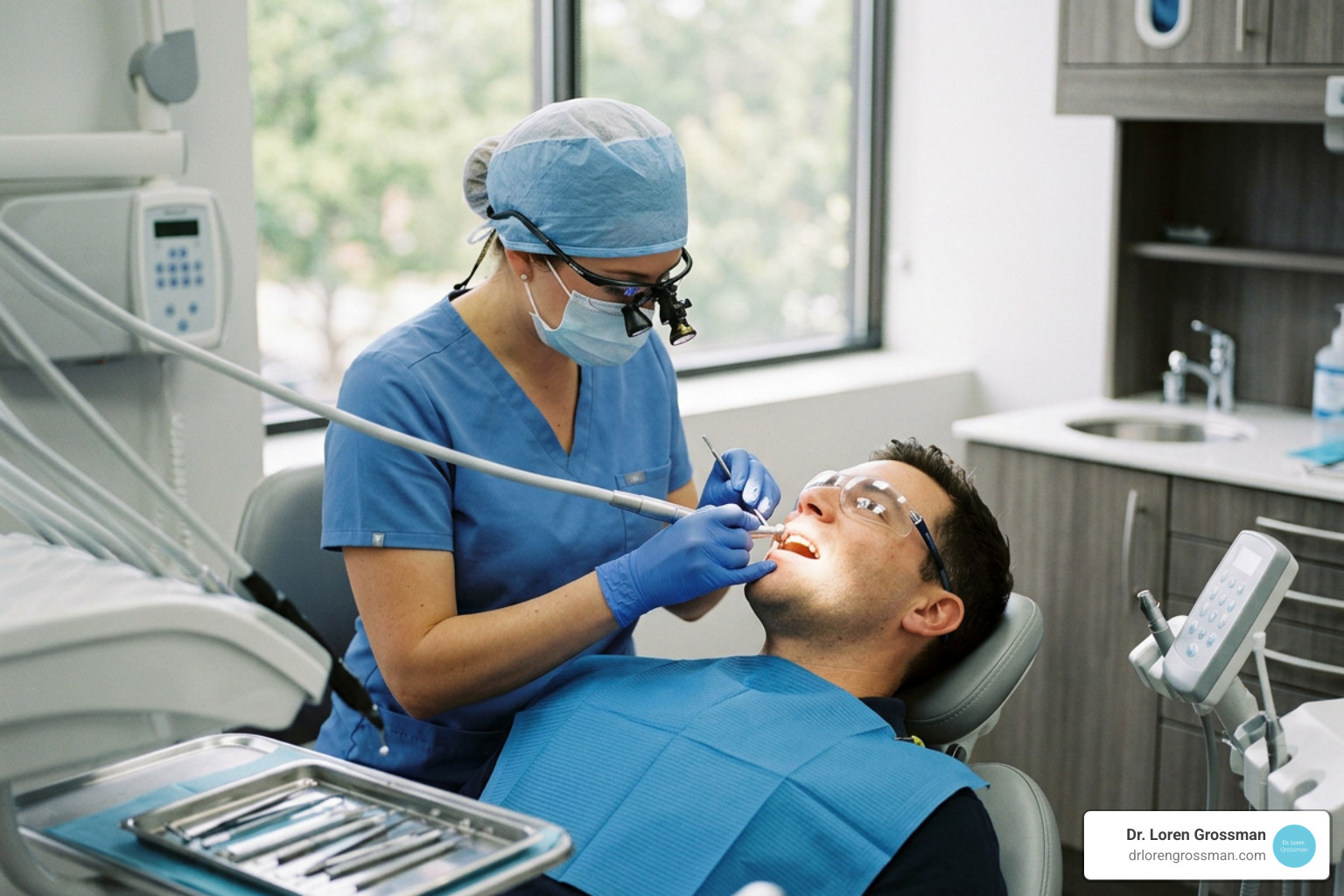
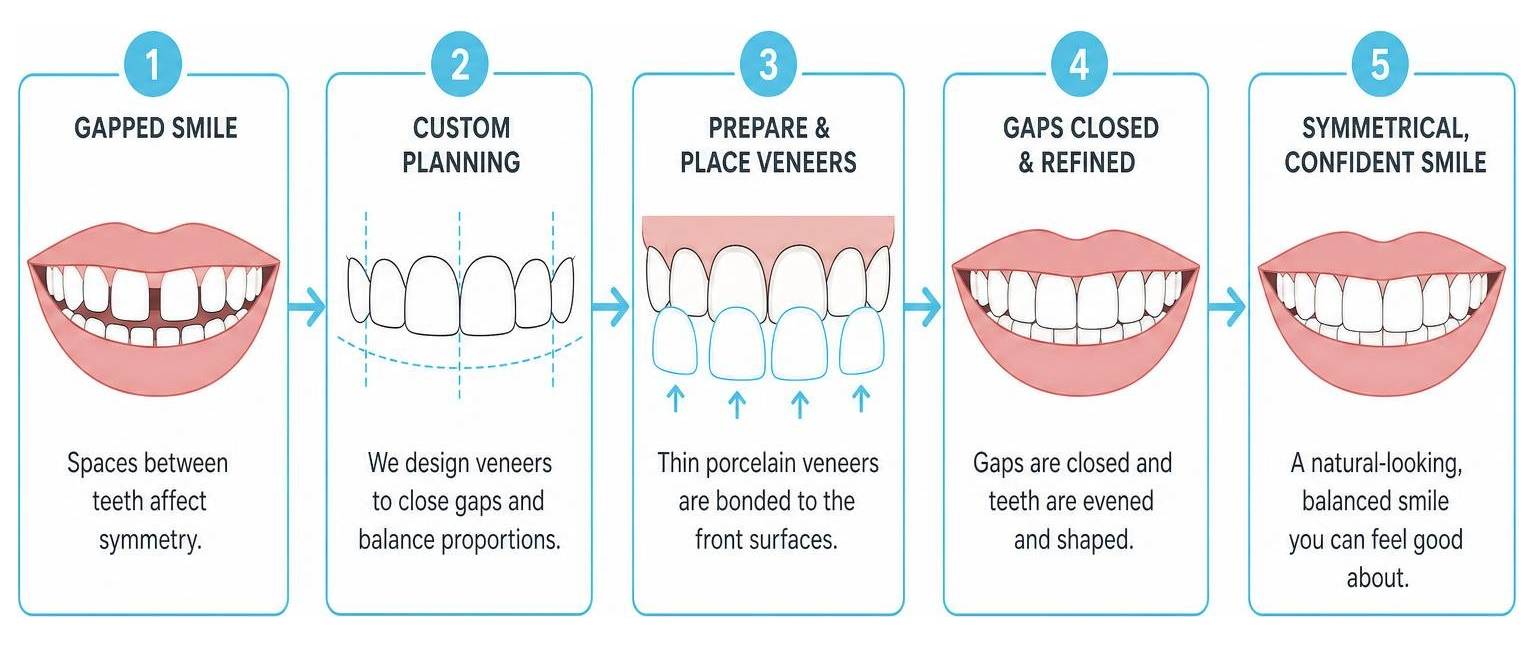
- Consultation and Smile Design: We begin by examining your teeth, taking digital X-rays, and discussing your goals. We measure your gaps and design a customized plan that respects your unique facial harmony.
- Tooth Preparation: To ensure your veneers sit flush with your gum line and do not look bulky, we carefully remove a tiny layer of enamel from the front of the teeth — typically about 0.5mm. This process is highly conservative and is performed under local anesthesia to ensure you remain completely comfortable.
- Impressions: We take highly accurate digital impressions of your prepared teeth. These scans are sent to our trusted dental laboratory, where your custom porcelain veneers are fabricated.
- Temporary Veneers: We place temporary acrylic veneers to protect your prepared teeth and keep your smile looking great while the lab crafts your permanent restorations.
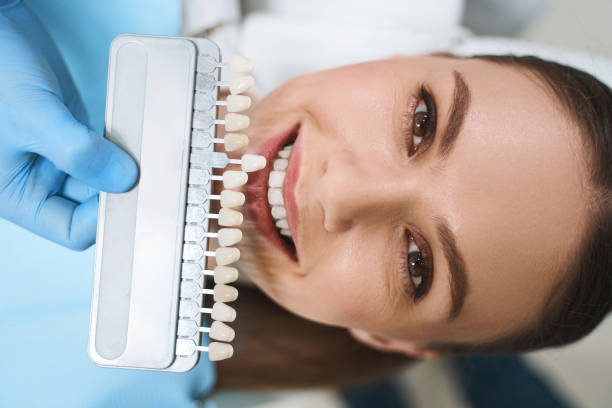
- Final Bonding: Once your custom veneers arrive, we place them on your teeth to check the fit, shape, and color. After making any necessary micro-adjustments, we use a strong dental adhesive and a specialized curing light to permanently bond them in place.
For a more comprehensive look at each stage, check out our Dental Veneers Procedure: A Detailed Guide.
Is the Veneer Process Reversible?
One of the most important things to understand before choosing traditional porcelain veneers is that the process is permanent and irreversible.
Because we must remove a thin layer of enamel (about 0.5mm) to prep the teeth, those teeth will always require some form of restoration to protect them. Enamel does not grow back.
If you are looking for a completely reversible option, you might consider prepless veneers or composite bonding. Prepless veneers are ultra-thin and can sometimes be bonded directly to your natural enamel without shaving. However, they are only suitable for very specific cases where the teeth are already slightly set back.
If you want to know exactly how much enamel is involved, read our detailed article: Teeth Prepped for Veneers: How Much Enamel Is Actually Removed.
Cost, Longevity, and Maintenance of Veneers
With proper care, high-quality porcelain veneers are incredibly durable, boasting a lifespan of 10 to 15 years or more. Maintaining them is simple and does not require any fancy equipment.
To keep your new smile looking gorgeous and prevent decay under the restorations, follow these daily tips:
- Use Non-Abrasive Toothpaste: Avoid whitening toothpastes, as they often contain abrasive particles that can scratch the polished surface of your porcelain.
- Floss Daily: Pay close attention to the margins where the veneer meets your natural tooth near the gum line to prevent plaque buildup.
- Avoid Biting Hard Objects: Never use your teeth as tools to open packages, and avoid biting directly into hard candy, ice, or raw carrots with your front teeth.
- Wear a Nightguard: If you grind or clench your teeth at night, a custom nightguard is essential to protect your investment from fracturing.
For more helpful hacks, read our guide on Don’t Ruin Your Smile: A Guide to Caring for Dental Veneers.
The Cost of Veneers for Gaps in Teeth
Because veneers are a highly customized, premium cosmetic treatment, the cost can vary. Veneers are charged on a per-tooth basis. If you only need to close a single midline gap, your cost will be limited to two veneers. If you have widespread spacing, you may require a larger smile makeover.
The total investment depends on:
- The material selected (porcelain vs. composite)
- The complexity of your spacing and bite
- The number of teeth treated for symmetry
Because veneers are classified as a cosmetic treatment, standard dental insurance plans typically do not cover them. However, our team is always happy to help you explore your benefits, and we offer flexible financing options to help fit your dream smile into your budget.
To learn more about pricing in our region, check out The Price of a Perfect Smile: Veneers Cost in PA.
Frequently Asked Questions about Veneers for Gaps
Our patients often have excellent questions during their consultations. Here are a few of the most common things we discuss:
Can veneers fix gaps caused by missing teeth?
No, veneers cannot physically replace a missing tooth. Veneers must be bonded to an existing, stable tooth structure.
However, if you have a gap because a tooth is missing (such as a congenital missing lateral incisor), we can use a dental bridge or a dental implant to fill the empty space, and then use veneers on the surrounding teeth to ensure a perfectly balanced, symmetrical smile.
Do veneers look natural or will they make my teeth look too wide?
When designed by an experienced cosmetic dentist, veneers look incredibly natural. We do not use a “one-size-fits-all” approach.
We carefully calculate the ideal proportions of your teeth based on your facial structure, lip line, and jaw size. By distributing the space evenly across multiple teeth, we ensure that your teeth look beautifully proportioned and never too wide or bulky.
What happens if a veneer chips or comes off?
While it is rare for a high-quality porcelain veneer to come off, accidents can happen. If a veneer chips or “bails,” do not panic. Keep the piece if it is intact, avoid hot or cold foods, and contact us right away.
We can evaluate the tooth and determine whether we can re-bond the veneer or if a replacement is needed. If you ever find yourself in this situation, read our advice on What to Do When Your Veneer Decides to Bail.
Conclusion
Closing the gaps in your teeth is about more than just aesthetics — it is about reclaiming your confidence, speaking without hesitation, and smiling freely in every photo. Whether you have a small space between your front teeth or widespread gaps that have widened over the years, modern dental veneers offer a fast, beautiful, and long-lasting solution.
At the cosmetic dentistry practice of Dr. Loren Grossman in Kingston, PA, we combine advanced technology with decades of experience to deliver personalized, natural-looking smile transformations. We serve patients throughout Northeastern Pennsylvania and the Wyoming Valley, helping them achieve the smiles of their dreams.
Are you ready to say goodbye to the gaps in your teeth? Schedule a consultation for dental veneers with us today, and let’s start your journey to a more confident smile!