What You Should Know About Dental Crowns (Quick Answer)
Dental crowns are tooth-shaped caps placed over a damaged or weakened tooth to restore its shape, strength, and appearance.
Here is what most people want to know right away:
| Question | Quick Answer |
|---|---|
| What is a dental crown? | A custom cap that fits over a damaged tooth above the gum line |
| When do you need one? | After a root canal, large filling, crack, severe decay, or for cosmetic reasons |
| What are they made of? | Porcelain, zirconia, gold, porcelain-fused-to-metal, or composite resin |
| How long do they last? | Typically 5 to 15 years; up to 30 years with excellent care |
| Does it hurt? | No — local anesthesia is used; mild sensitivity afterward is normal |
| How many visits? | Usually 2 visits, spaced 2 to 3 weeks apart |
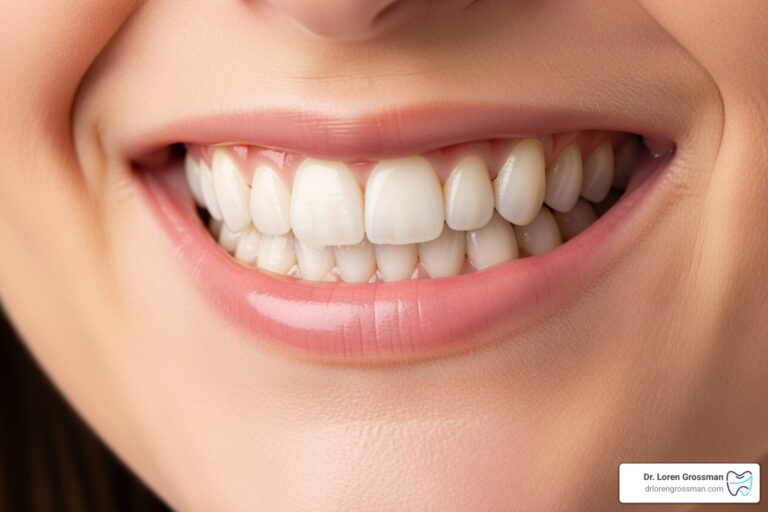
Whether your tooth is cracked, worn down, or just finished a root canal, a crown can protect it and bring back a natural-looking smile.
I’m Dr. Loren Grossman, a family and cosmetic dentist serving Northeastern Pennsylvania since 1984, and dental crowns are one of the most common and effective restorations I place for patients every week. In this guide, I’ll walk you through everything you need to know — from materials and procedure steps to costs, care, and alternatives.
What is a Dental Crown and When Do You Need One?
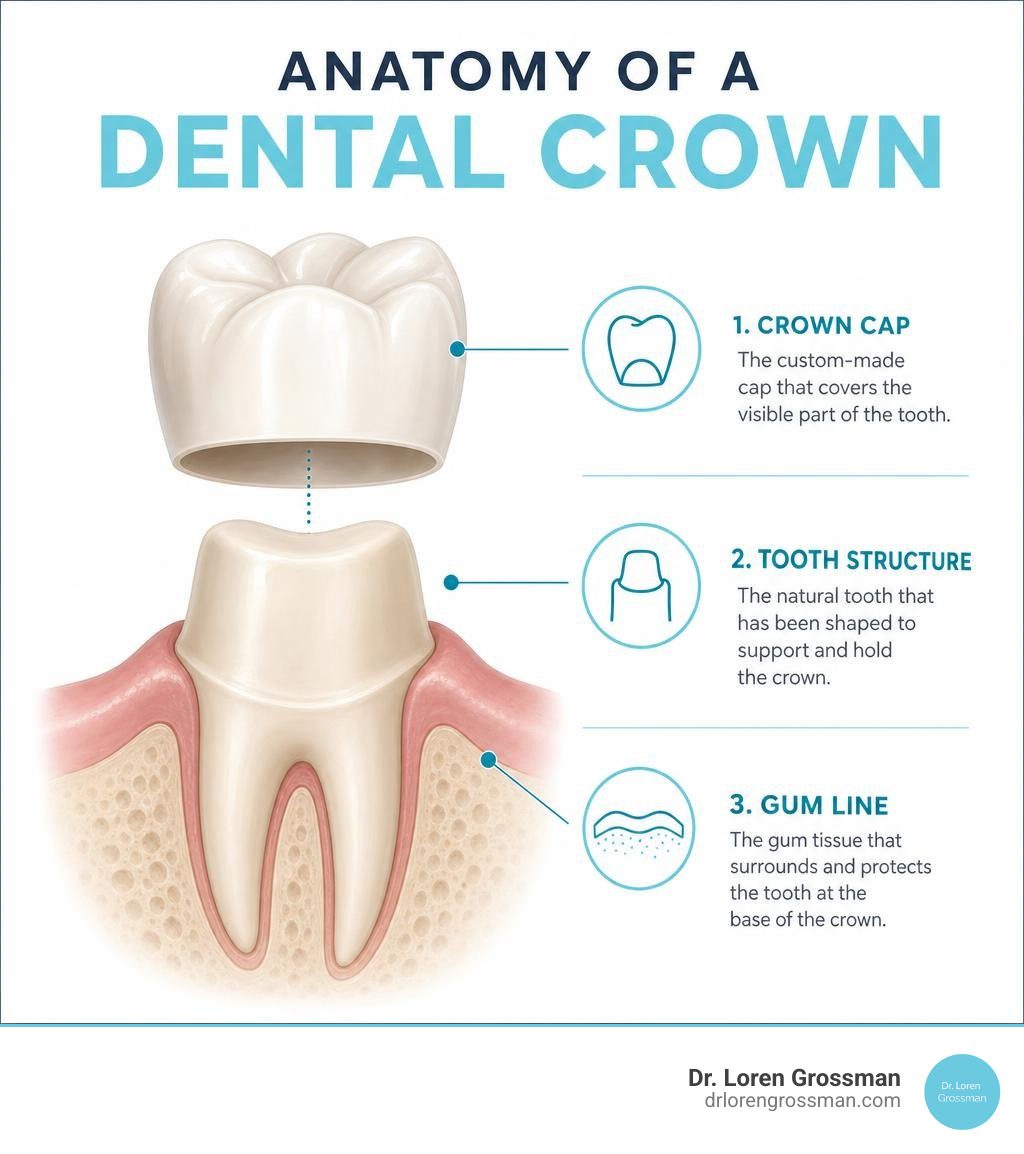
At its core, a dental crown (often referred to by patients as a “tooth cap”) is a custom-fabricated dental restoration designed to fully encase a damaged tooth. Unlike a filling, which only plugs a hole inside a tooth, a crown covers the entire visible portion of the tooth above the gum line. Think of it as a custom-fitted, highly durable helmet that absorbs the pressure of chewing so your weakened tooth underneath doesn’t have to.
When a tooth suffers from structural damage, its integrity is compromised. Our goal in general dentistry is always to preserve your natural teeth whenever possible. Placing a crown provides the necessary structural support to keep a damaged tooth functional, preventing the need for an extraction. According to the Dental crowns: MedlinePlus Medical Encyclopedia, crowns are essential for restoring both the utility and physical form of teeth that have undergone significant trauma.
For patients in Northeastern Pennsylvania looking to restore their oral health, we offer comprehensive evaluations. You can read more about how we approach these protective treatments by visiting our page on General Dentistry or exploring our full range of Services.
Common Uses for Dental Crowns
Single crown placement is the most common dental restoration performed in the United States. But how do you know if you actually need one? There are several clinical scenarios where we will recommend placing a crown:
- Severe Tooth Decay: When a cavity becomes too large, there isn’t enough healthy enamel left to support a standard filling. If we try to place a massive filling, the remaining thin walls of the tooth are highly likely to fracture under normal chewing forces.
- Cracked or Chipped Teeth: A cracked tooth is a ticking time bomb. Chewing puts pressure on the crack, causing it to flex and expand, which can eventually split the tooth down to the root. A crown holds the tooth together, preventing the crack from worsening.
- Following a Root Canal: After root canal therapy, a tooth is no longer “alive.” Because it lacks a blood supply, the remaining tooth structure becomes brittle and incredibly fragile over time. Capping it with a crown is crucial to prevent fractures.
- Replacing Large, Failing Fillings: If you have old, wide amalgam or composite fillings that are beginning to leak or break, replacing them with a crown is often the safest way to save the tooth.
- Severely Worn Down Teeth: Chronic teeth grinding (bruxism) or acid reflux can wear teeth down to flat, sensitive nubs. Crowns restore the tooth’s height and correct your bite alignment.
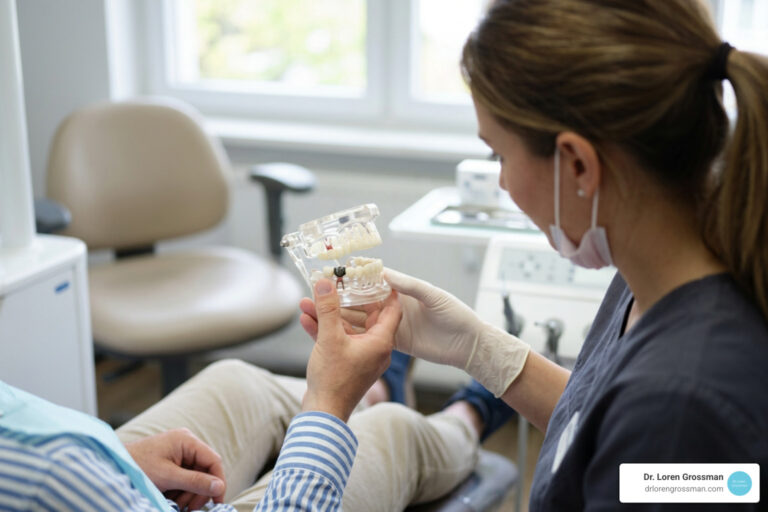
- Completing Dental Implants: When replacing a missing tooth with an implant, the titanium post acts as the root, and a custom crown is screwed or cemented on top to serve as your new visible tooth.
Types of Dental Crown Materials
Modern dentistry is highly customized, and we have a variety of advanced materials at our disposal to create your crown. The right choice depends on the tooth’s location in your mouth, your aesthetic goals, your budget, and whether you have a habit of grinding your teeth.
Here are the primary materials used in dental crowns today:
- All-Ceramic or Porcelain: These are the gold standard for front teeth. They offer the most natural appearance because they mimic the translucency and light-reflecting properties of natural tooth enamel.
- Zirconia: An incredibly strong, biocompatible ceramic material. Zirconia crowns can withstand heavy chewing forces, making them ideal for back molars. They are highly resistant to chipping and wear down opposing natural teeth less than other ceramics.
- Porcelain-Fused-to-Metal (PFM): These crowns feature a metal interior structure for strength, with a porcelain exterior baked over it for aesthetics. While durable, they can sometimes display a dark metal line near the gum line, especially if your gums recede over time.
- Gold and Metal Alloys: Made of high-noble metals, gold crowns are virtually indestructible. They rarely chip, require the least amount of natural tooth structure to be removed during preparation, and wear at a rate similar to natural enamel. Because of their metallic color, they are typically reserved for out-of-sight back molars.
- Composite Resin: A budget-friendly option, but they wear down more quickly and are more prone to fractures than porcelain or metal crowns.
- Stainless Steel: Pre-formed crowns primarily used as temporary restorations for adults, or as permanent crowns for children’s primary (baby) teeth because they are cost-effective and fall out naturally when the baby tooth sheds.
To help you compare your options, here is a breakdown of how these materials stack up:
| Material | Durability | Aesthetics | Best Suited For | Cost |
|---|---|---|---|---|
| All-Ceramic / Porcelain | Moderate to High | Excellent | Front teeth / Visible areas | High |
| Zirconia | Extremely High | Very Good | Molars & Premolars | High |
| Porcelain-Fused-to-Metal (PFM) | High | Good | Back teeth / Bridges | Moderate |
| Gold Alloy | Maximum | Low (Metallic) | Out-of-sight Molars | High |
| Composite Resin | Low to Moderate | Good | Temporary / Budget | Low |
| Stainless Steel | Moderate | Low (Silver) | Pediatric / Temporaries | Low |
For a deeper dive into the science and clinical indications of these materials, you can read the comprehensive overview provided by the Cleveland Clinic on Dental Crowns: Types, Procedure & Care.
Crowns vs. Veneers and Bridges
It is common to confuse dental crowns with other popular dental restorations, but they serve very different purposes.
- Veneers: Porcelain veneers are purely cosmetic restorations. They are thin shells of porcelain bonded only to the front surface of the tooth. Veneers require very little enamel removal and are used to correct minor chips, gaps, or deep stains. Crowns, on the other hand, are restorative and cover the entire 360 degrees of the tooth to rebuild its strength.
- Bridges: While a crown restores a single damaged tooth, a dental bridge is used to replace one or more completely missing teeth. A bridge consists of two crowns placed on the healthy teeth on either side of the gap (called abutments), which suspend a false tooth (pontic) in the middle.
If you are trying to understand which of these options is right for your unique situation, check out our Beginner’s Guide to Dental Crowns & Bridges for a clear, patient-friendly breakdown.
The Dental Crown Procedure: Step-by-Step
Getting a dental crown is a highly precise process that typically requires two visits to our office, spaced about two to three weeks apart.
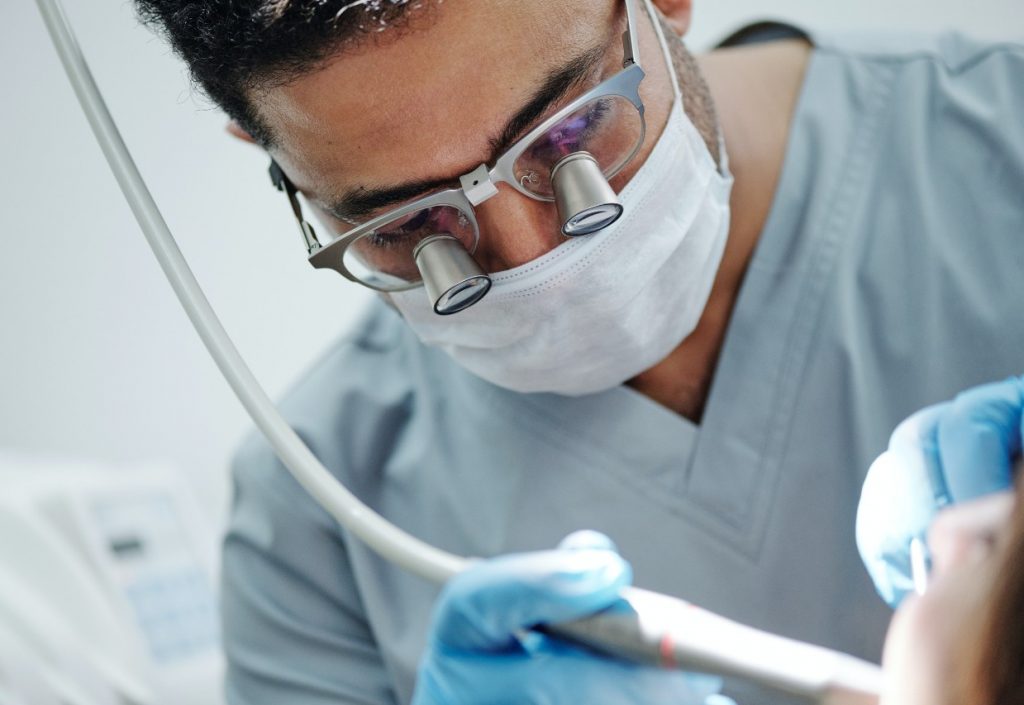
Here is exactly what you can expect during your treatment:
- Initial Assessment and X-Rays: We begin by taking digital X-rays to assess the health of the tooth’s root and surrounding bone. If there is active infection or decay reaching the pulp, a root canal may be necessary before we place the crown.
- Numbing the Area: We administer a local anesthetic to ensure you are completely comfortable and feel absolutely nothing during the tooth preparation.
- Tooth Shaping: To make room for the crown to fit over your tooth seamlessly without looking bulky, we must carefully shape the enamel. We remove a small amount of tooth structure from the top and sides. The amount of enamel removed depends on the material chosen; for example, gold requires less reduction than porcelain.
- Impressions or Digital Scans: Once the tooth is shaped, we take a highly accurate digital scan or traditional impression of your mouth. This ensures your permanent crown will perfectly match your bite and align with your surrounding teeth.
- Temporary Crown Placement: Because it takes our dental laboratory a couple of weeks to fabricate your custom permanent crown, we place a temporary crown over your prepared tooth to protect it in the meantime.
- Permanent Placement: Once your permanent crown arrives from the lab, you return to our office. We remove the temporary crown, thoroughly clean the tooth, check the fit, color, and your bite, and then permanently bond the new crown using specialized dental cement.
For a highly detailed, clinical look at preparation guidelines, margins, and the mechanics of crown retention, you can refer to the Wikipedia article on Crown (dental restoration)).
Preparing the Tooth and Placing Temporary Dental Crowns
The temporary crown is an essential step in your journey, but it requires a little extra care. Typically made of acrylic or composite resin, temporary crowns are held in place with temporary cement so they can be easily removed during your second visit.
Because the temporary cement is designed to release easily, you must avoid extremely sticky, chewy, or hard foods (like caramel, chewing gum, and tough nuts) on that side of your mouth. When flossing around a temporary crown, always slide the floss out horizontally rather than pulling it straight up, which can accidentally pop the temporary crown off.
If you experience any discomfort or a strange sensation when biting down on your temporary or newly placed permanent crown, it could mean the restoration is sitting slightly too high. To understand why this happens and how we fix it, read our guide on Is Your Crown Too High? Solving the Mystery of Biting Pain.
Longevity, Care, and Alternatives to Dental Crowns
One of the most common questions we hear is: “How long will my dental crown last?”
On average, dental crowns last between 5 and 15 years. However, with meticulous oral hygiene and regular professional cleanings, crowns can easily last upwards of 30 years. It is important to remember that while crowns are incredibly durable, they are not completely indestructible. The crown itself cannot decay, but the natural tooth structure underneath it is still vulnerable to cavities if plaque is allowed to build up along the gum line.
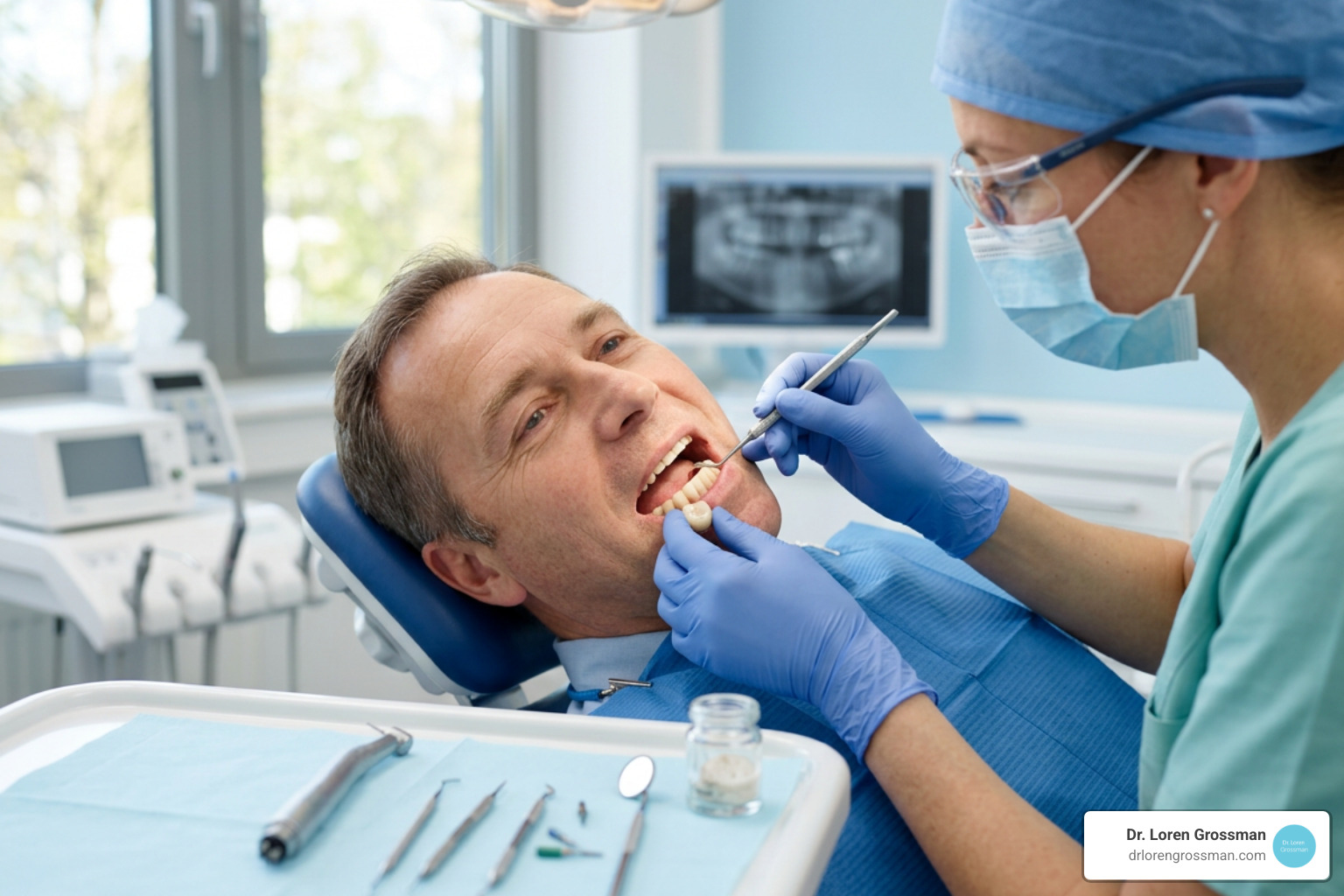
If a tooth is damaged but does not quite require a full crown, we may recommend inlays or onlays (sometimes called partial crowns). These cover only a portion of the tooth’s chewing surface, preserving more of your natural tooth structure. If a tooth is completely unsalvable, the alternative is to extract the tooth and replace it with a dental implant.
To learn more about maximizing the lifespan of your restoration, read our detailed article on Dental Crown Lifespan: How to Make Your Crown Last a Lifetime.
Daily Maintenance and Aftercare
Caring for your permanent dental crown is remarkably simple — you treat it just like your natural teeth! Here are our top recommendations for keeping your crown in pristine condition:
- Brush and Floss Daily: Brush twice a day with a soft-bristled toothbrush and non-abrasive fluoride toothpaste. Pay extra attention to the margin where the crown meets your gum line, as this is where plaque loves to hide.
- Wear a Custom Night Guard: If you have a habit of clenching or grinding your teeth at night (bruxism), the intense pressure can fracture porcelain. A custom night guard acts as a protective barrier.
- Avoid Chewing Hard Objects: Never use your teeth to open packaging, and avoid chewing on ice cubes, hard candies, or popcorn kernels.
- Maintain Regular Dental Visits: Seeing us twice a year allows us to monitor the structural integrity of your crown through visual exams and digital X-rays.
For more practical tips on maintaining your oral health after restoration, check out our guide on the Top Ways to Take Care of Your Dental Crown.
Frequently Asked Questions About Dental Crowns
To help you make an informed decision, we have compiled answers to some of the most common questions our patients ask. If you want to explore more clinical details about complications and care, WebMD offers a fantastic resource on Dental Crowns: Purpose, Procedure, Complications, Care.
What are the risks or complications of getting a crown?
While dental crowns have an incredibly high success rate, minor complications can occasionally occur:
- Nerve Sensitivity: Because we must remove a layer of enamel, the tooth may be sensitive to hot and cold temperatures for a few days after placement. If the sensitivity persists or turns into a throbbing ache, it could mean the tooth’s nerve was already compromised and may require a root canal.
- Crown Loosening or Falling Off: If the dental cement washes out or the underlying tooth structure experiences new decay, the crown can become loose. If your crown comes off, keep it safe and call us immediately to have it re-cemented.
- Decay Under the Crown: If oral hygiene slips, bacteria can slip under the margin of the crown, causing a cavity in the remaining natural tooth structure.
- Allergic Reactions: Though extremely rare, some patients may have a sensitivity to the metals used in PFM or gold alloy crowns. In these cases, all-ceramic or zirconia crowns are the perfect alternative.
How much do dental crowns cost and does insurance cover them?
The out-of-pocket cost of a dental crown varies depending on the material used (for example, gold and high-end zirconia typically cost more than porcelain-fused-to-metal) and whether you need preliminary procedures like a root canal or a core buildup.
Most dental insurance plans cover up to 50% of the cost of a dental crown if it is deemed medically necessary (meaning it is restoring a broken or decayed tooth rather than being placed purely for cosmetic reasons). We recommend checking with your insurance provider to understand your specific benefits. For patients without insurance, we offer flexible financing options and dental savings plans to make your treatment affordable.
Does getting a dental crown hurt?
Not at all! We use local anesthetics to completely numb the tooth and surrounding gums before we begin shaping the tooth. You might feel some mild pressure during the procedure, but you should not feel any pain. After the anesthetic wears off, you may experience some mild soreness in the gums or slight tooth sensitivity, which can easily be managed with over-the-counter pain relievers and typically fades within 24 to 48 hours.
Conclusion
A damaged, cracked, or severely decayed tooth doesn’t mean you have to lose your smile. With modern dental technology, dental crowns offer a beautiful, incredibly durable, and long-lasting way to protect your teeth and restore your confidence.
At the office of Dr. Loren Grossman, we are proud to provide top-tier cosmetic and general dentistry to patients throughout Northeastern Pennsylvania. Our friendly team in Kingston, PA, utilizes advanced technology and a patient-focused approach to deliver personalized, comfortable care that results in exceptional smile transformations.
Ready to restore your smile? Schedule a consultation for Crowns & Bridges with us today, and let us help you keep your teeth healthy and beautiful for a lifetime!