Finding Professional Teeth Whitening in Kingston, PA
For professional teeth whitening in Kingston, PA, start with a dentist who checks your teeth and gums before recommending treatment. Ask whether in-office whitening or take-home trays better fit your goals, how they manage sensitivity, and whether crowns or fillings could look darker beside your whitened teeth. A good plan starts with your oral health, not a promise of a certain shade.
I’m Dr. Loren Grossman, and I’ve provided cosmetic and family dentistry in the Wyoming Valley since 1984, including experience with chairside whitening. If you’re searching for “professional teeth whitening kingston pa,” this guide will help you know what to ask before you book.
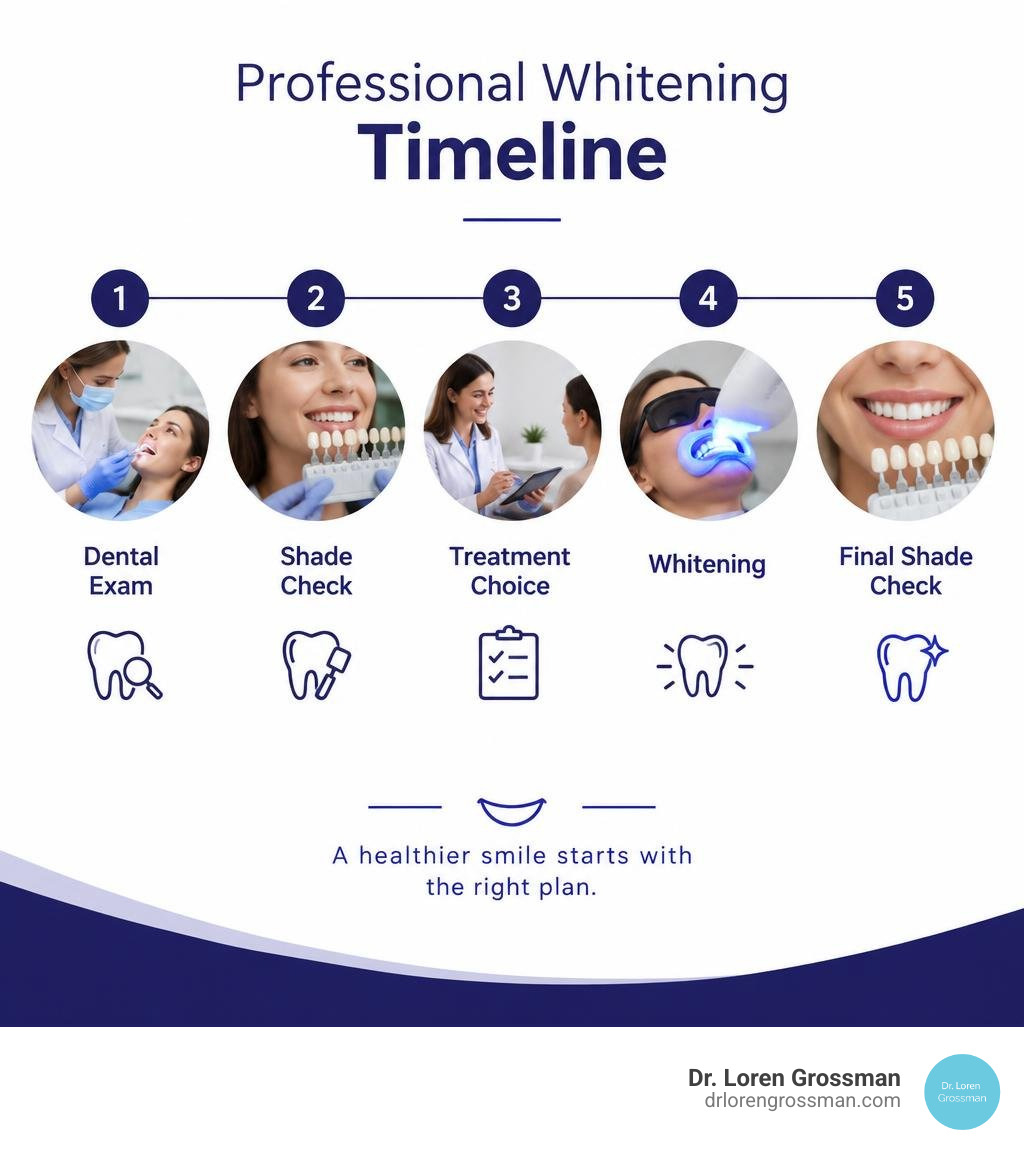
Professional teeth whitening kingston pa terms explained:
Why Choose Professional Teeth Whitening in Kingston, PA over At-Home Kits
When looking to brighten your smile, the dental aisle at your local supermarket offers dozens of strips, charcoal pastes, and generic LED kits. However, comparing professional teeth whitening vs at-home products reveals significant differences in safety, speed, and lasting power.
Store-bought kits rely on low-concentration bleaching formulas to remain safe for unregulated, unsupervised consumer use. While these mild solutions can lift subtle surface stains, they rarely penetrate deep enough to tackle intrinsic discoloration. In contrast, clinical treatments utilize high-concentration hydrogen peroxide gels that actively break down deep-set stains within the dentin layer.
More importantly, clinical whitening prioritizes your oral safety. Over-the-counter strips and ill-fitting boil-and-bite trays frequently allow active bleaching agents to leak onto delicate soft tissue, causing chemical burns, gum blanching, and uneven blotchiness. In our clinical setting, we apply a protective gingival barrier that shields your gums completely before the bleaching formula ever touches your teeth.
| Feature | Professional In-Office Whitening | Over-the-Counter Whitening Kits |
|---|---|---|
| Active Peroxide Level | High concentration (25% to 40% hydrogen peroxide) | Low concentration (3% to 10% hydrogen peroxide) |
| Application Time | 60 to 90 minutes in a single visit | 10 to 45 minutes daily for 2 to 4 weeks |
| Gum & Tissue Protection | Custom light-cured gingival barrier | None or ill-fitting generic strip/tray |
| Shade Improvement | Up to 6 to 8 shades lighter in one appointment | Typically 1 to 2 shades with gradual, uneven results |
| Supervision | Full dental professional monitoring | Unsupervised DIY application |
| Enamel Safety | Neutral pH formulas with desensitizing agents | Variable pH levels that may erode enamel |
By choosing dental supervision, you receive a predictable shade enhancement while preserving your enamel micro-hardness and soft tissue health.
In-Office Treatments vs. Custom Take-Home Trays
Patients often ask whether they should opt for immediate chairside whitening or take-home systems. Both methods deliver outstanding results, but they serve different lifestyles and timelines.
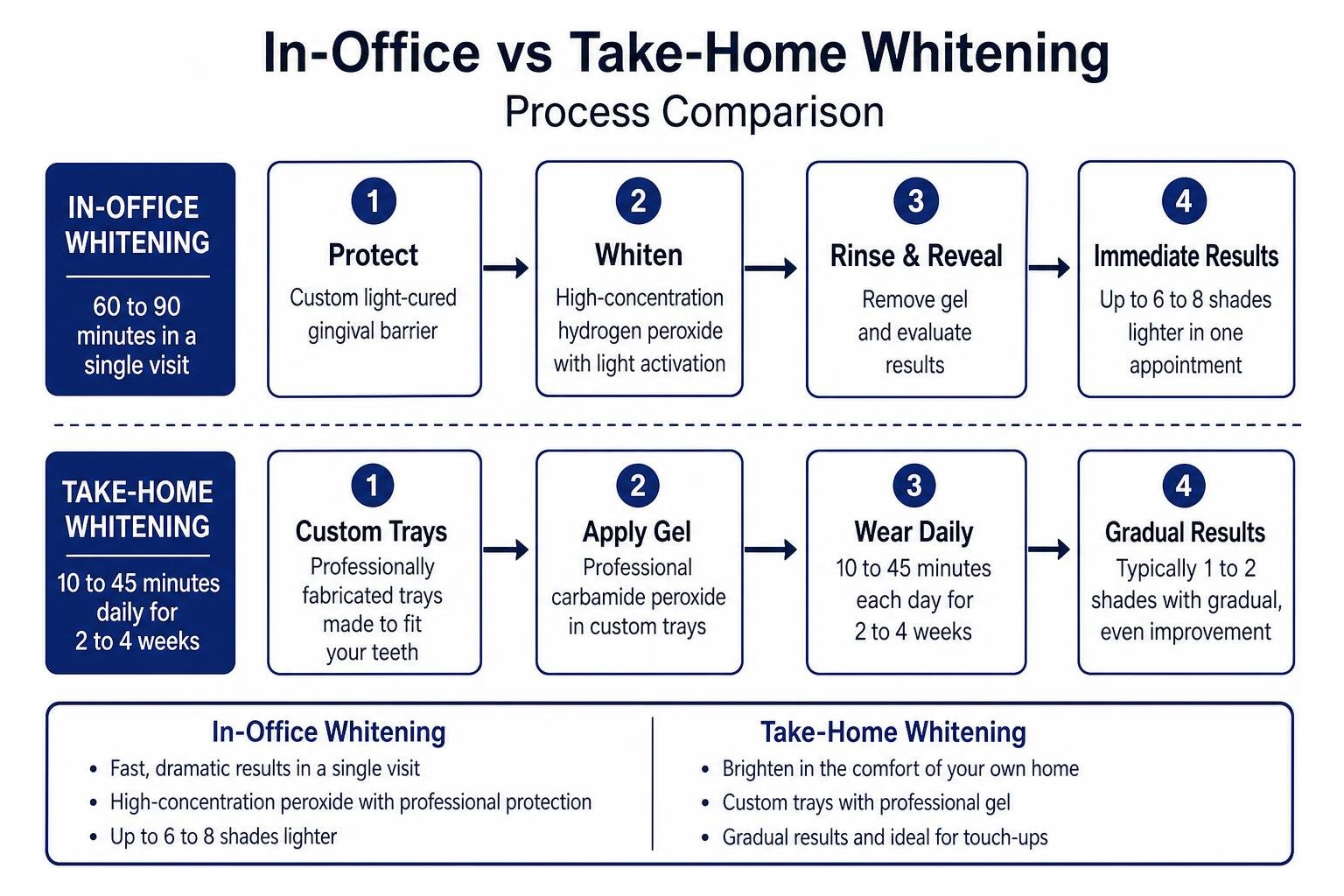
Chairside bleaching provides rapid results in a single, comfortable visit. Utilizing potent hydrogen peroxide formulations activated by specialized light technology, chairside care oxidizes years of staining in just over an hour.
If you prefer brightening your teeth in the comfort of your own home, we also fabricate custom-fitted trays tailored directly to your dental anatomy. These trays use professional carbamide peroxide solutions—such as specialized Opalescence take-home trays—which break down more slowly over several hours. Take-home trays offer gradual shade improvement and serve as a reliable tool for periodic touch-ups down the road.
Who Is an Ideal Candidate for Professional Teeth Whitening in Kingston, PA?
Professional whitening produces remarkable transformations, but it is essential to ensure your mouth is healthy before beginning any aesthetic treatment.
An ideal candidate typically presents with:
- Extrinsic Stains: Yellow or light brown discoloration caused by coffee, tea, red wine, dark berries, tobacco, and everyday dietary pigments.
- Healthy Gums and Enamel: Absence of active periodontal disease, gingivitis, or severe enamel thinning.
- Intact Natural Dentition: Teeth free of active dental decay, untreated cavities, or exposed root surfaces.
- Realistic Aesthetic Goals: Understanding how natural tooth structure responds to peroxide-based oxidation.
Before applying any whitening gel, we perform a comprehensive oral health evaluation. If we detect plaque buildup, tartar, or gingival inflammation, a routine cleaning is performed first. Applying bleaching gel over tartar leads to patchy, uneven coloration because the active peroxide cannot reach the tooth surface underneath. If you are exploring cosmetic solutions, checking a detailed teeth whitening buyer’s guide can help you match your goals to the right treatment path.
What to Expect During In-Office Dental Whitening

Many patients wonder what actually happens once they sit back in the dental chair. The clinical whitening journey is straightforward, safe, and designed for your complete relaxation.
We begin by documenting your baseline shade using a standardized dental shade guide or digital imaging. This establishes an objective benchmark so we can measure your precise progress. Next, we polish your teeth with a pumice paste to eliminate superficial biofilm.
After preparing the teeth, we isolate the lips, cheeks, and gums using specialized retractors and a curing liquid resin barrier. Once your soft tissues are isolated, the active whitening gel is applied to the front surfaces of your teeth. The gel works across three to four 15-minute cycles, breaking apart stubborn chromogens (staining molecules). At the conclusion of the session, we rinse the gel, remove the protective barrier, and evaluate your final shade transformation under natural lighting to ensure dramatic shade improvements.
What to Expect During Professional Teeth Whitening in Kingston, PA
When receiving in-office care at our practice, we utilize advanced Zoom whitening technology. This system combines a proprietary hydrogen peroxide gel with a specialized blue LED light accelerator.
The light source accelerates the breakdown of hydrogen peroxide molecules, allowing active oxygen radicals to penetrate microscopic enamel prisms faster. A typical appointment lasts between 60 to 90 minutes. You can relax, listen to your favorite music, or watch entertainment while the system lifts deep stains. Most patients walk out of our office with a smile that is 6 to 8 shades brighter than when they walked in.
Managing Tooth Sensitivity During and After Treatment
A common hesitation patients have is the fear of “zingers”—those brief, sharp sensations that can occur during or after dental bleaching. Sensitivity occurs because the bleaching process temporarily opens microscopic dentinal tubules, allowing temperature changes to stimulate the inner nerve.
We implement proactive strategies to ensure safe whitening without tooth sensitivity. Our whitening formulas incorporate desensitizing compounds like potassium nitrate and amorphous calcium phosphate (ACP). Potassium nitrate calms the dental nerve endings, while ACP micro-crystallizes along the enamel surface to restore hydration and seal exposed tubules.
Post-treatment sensitivity is transient and typically resolves completely within 24 to 48 hours. Using a desensitizing toothpaste and avoiding ice-cold beverages for a day or two helps keep you completely comfortable.
Professional Whitening vs. Porcelain Veneers: Comparing Cosmetic Options

Teeth whitening is the most non-invasive cosmetic dental procedure available, but it is not the only way to enhance your smile. Depending on your oral condition, porcelain veneers may represent a better long-term alternative. Exploring comprehensive smile makeover solutions helps you determine which treatment aligns with your aesthetic vision, budget, and timeline.
| Consideration | Professional Teeth Whitening | Custom Porcelain Veneers |
|---|---|---|
| Primary Purpose | Brightening natural enamel shade | Correcting shade, shape, gaps, minor misalignment, and chips |
| Invasiveness | Non-invasive; preserves 100% of natural tooth structure | Minimally invasive; requires slight enamel contouring |
| Treatment Time | 1 visit (60–90 minutes) | 2 to 3 visits over 2 to 3 weeks |
| Longevity | 6 to 12+ months (requires touch-ups) | 10 to 20+ years with proper care |
| Stain Resistance | Natural enamel can re-stain over time | Highly stain-resistant ceramic surface |
| Ideal For | Dietary stains, aging, mild to moderate yellowing | Deep intrinsic stains, enamel defects, chipped or misshapen teeth |
While professional bleaching enhances the natural teeth you have, veneers rebuild the outer aesthetic facade. If your teeth suffer from severe wear, structural chipping, or deep internal discoloration that cannot be bleached out, veneers offer a permanent, transformative solution.
How Whitening Interacts with Crowns, Fillings, and Veneers
It is vital to understand that dental bleaching formulas interact exclusively with natural enamel and dentin. They do not change the color of existing restorative materials, such as non-porous dental porcelain, composite resin fillings, zirconia crowns, or bridge work.
If you have a tooth-colored composite filling or a crown on a front tooth, that restoration will stay its original shade while your surrounding natural teeth become noticeably brighter. This can create an uneven color mismatch.
During your initial consultation, we map out a customized sequencing plan. If you need new restorations or custom veneer procedures, we always whiten your natural teeth first. Once your desired brightness stabilizes (usually after 1 to 2 weeks), we carefully match your new permanent restorations to your radiant natural shade.
Frequently Asked Questions About Teeth Whitening in NEPA
How long do professional teeth whitening results last?
On average, clinical whitening results last anywhere from 6 to 12 months, and often even longer when properly maintained. The exact duration depends largely on your day-to-day lifestyle and dietary habits.
To maintain long-lasting whitening results:
- Follow the 48-Hour White Diet: For two days following your procedure, avoid dark-pigmented items such as coffee, colas, red wine, soy sauce, and tobacco while your enamel rehydrates.
- Practice Excellent Hygiene: Brush twice daily with a non-abrasive fluoride toothpaste and floss daily to prevent stain accumulation along the margins.
- Rinse After Staining Foods: Sip dark beverages through a straw and rinse your mouth with water after consuming acidic or dark foods.
- Schedule Periodic Touch-Ups: Use your custom take-home trays for a single overnight or short wear cycle every 6 to 12 months to refresh your brilliance.
Does in-office teeth whitening damage enamel?
No. Under clinical supervision, dental whitening is entirely safe for enamel. The high-grade gels we use are formulated with a neutral pH to ensure they do not etch or demineralize enamel surfaces. Studies consistently show that professional peroxide treatments do not alter the structural integrity or micro-hardness of healthy human teeth. By choosing safe and effective whitening methods, you protect both your oral health and your smile.
What types of stains cannot be removed by whitening?
Peroxide-based whitening is exceptional at lifting extrinsic stains caused by aging, foods, beverages, and tobacco. However, deep intrinsic discolorations located deep inside the structural matrix of the tooth may not respond to bleaching.
Common types of unbleachable discoloration include:
- Tetracycline Staining: Gray or dark blue horizontal banding caused by antibiotic use during early childhood tooth development.
- Dental Fluorosis: Mottled white spots or dark brown pitting caused by excessive fluoride intake during tooth formation.
- Trauma-Induced Discoloration: Teeth that have turned dark gray or black due to internal pulp necrosis following an injury.
- Thinning Enamel: Discoloration caused by advanced enamel erosion that exposes the naturally yellow underlying dentin.
When bleaching cannot penetrate these deep-set internal discolorations, we recommend cosmetic dentistry alternatives like porcelain veneers, composite bonding, or all-ceramic crowns to restore a bright, balanced aesthetic.
Conclusion
A radiant, confident smile can dramatically transform how you look and feel in professional and personal settings alike. When you seek professional teeth whitening in Kingston, PA, partnering with an experienced dental team ensures you achieve stunning, even results while protecting your gums and enamel.
At the practice of Dr. Loren Grossman, we bring over four decades of dedicated cosmetic and restorative experience to patients across Kingston, Wilkes-Barre, and the entire NEPA region. Whether you want an instant chairside boost for an upcoming milestone or prefer the flexibility of custom take-home trays, we personalize every step of your smile transformation.
Ready to see how bright your smile can truly be? Contact our team today to schedule your professional teeth whitening appointment and take the first step toward a dazzling, healthy smile.