What Determines How Many Veneers Do I Need for a Full Smile?
When patients ask, “How many veneers do I need for a full smile?”, the answer depends on their individual tooth display, lip dynamics, and cosmetic goals. For most patients, achieving a full smile makeover requires 6 to 8 veneers on the upper arch, with 8 units serving as the standard starting point to cover visible premolars. Patients with wider arches often need 10 veneers, while complete dual-arch transformations typically require 14 to 20 units across both the upper and lower teeth.
When determining your custom treatment plan, we perform an in-depth smile evaluation based on your facial proportions, lip movement, and overall aesthetic goals. Exploring our complete dental veneers guide reveals that creating a balanced, harmonious look relies heavily on assessing your specific dental anatomy rather than applying a one-size-fits-all formula. According to the American Dental Association, dental veneers are custom-made shells that cover the front surface of teeth to improve their appearance.
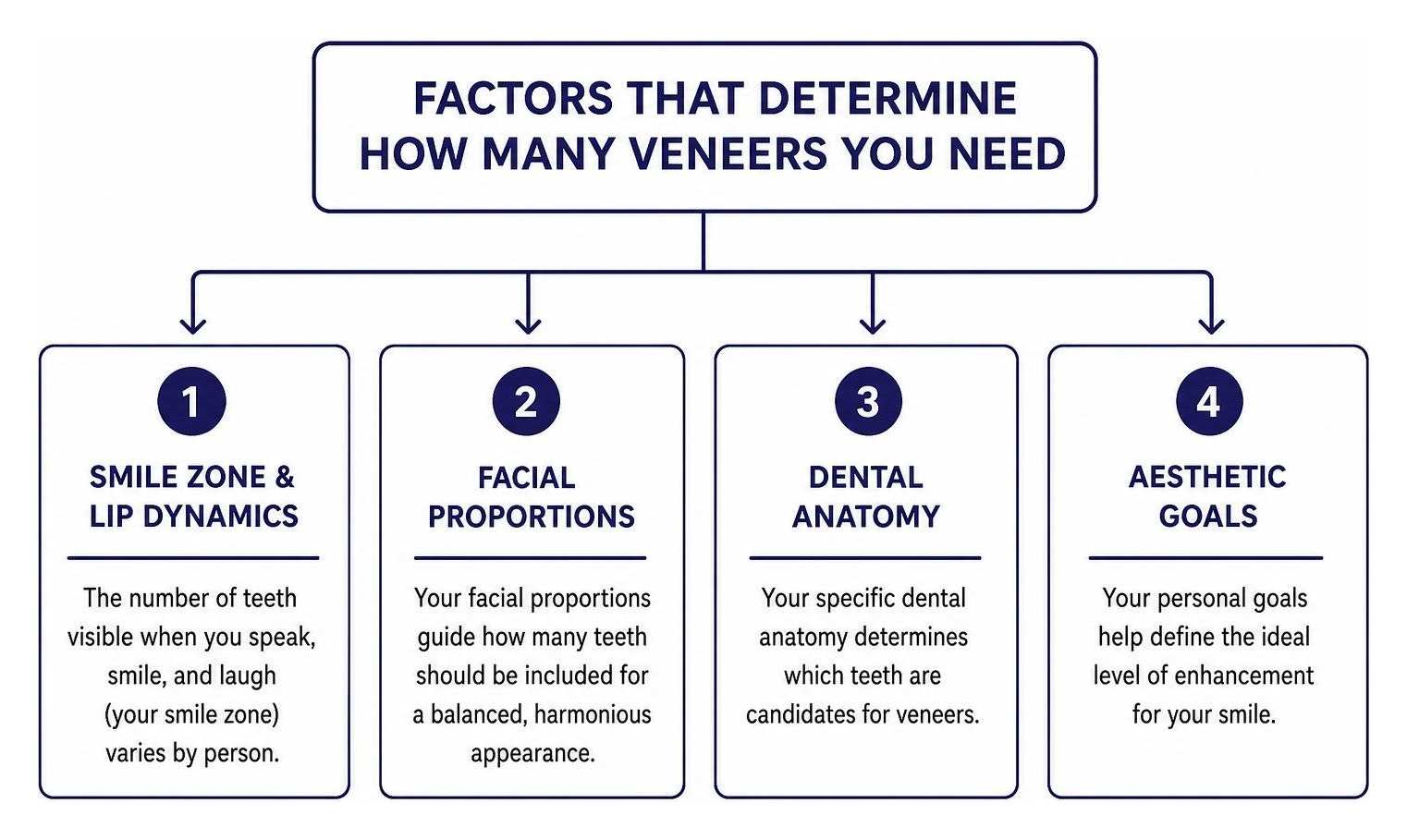
Understanding Your Smile Zone and Lip Dynamics
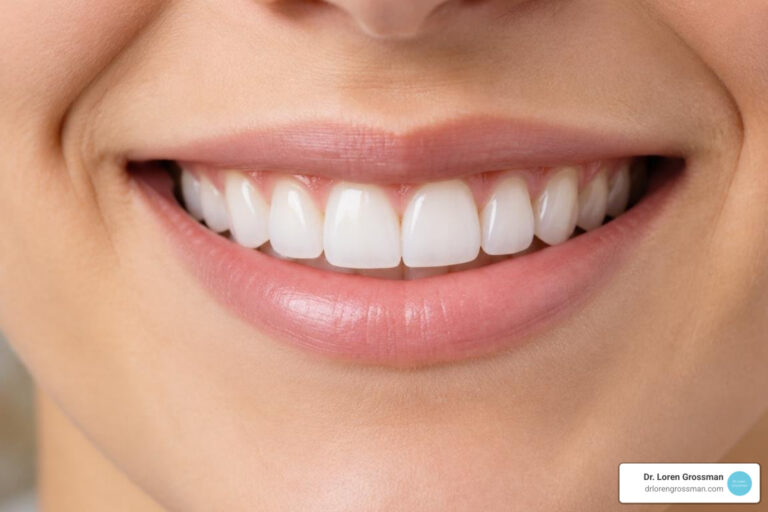
Your “smile zone” refers to all the teeth visible when you speak, smile, and laugh heartily. This zone varies significantly from person to person based on lip dynamics:
- Relaxed or Social Smile: A gentle, everyday smile typically reveals only your upper six front teeth (the central incisors, lateral incisors, and canines).
- Broad Laughter: When you laugh openly or smile wide, your facial muscles pull your lips back, often revealing up to 10 or 12 teeth across your upper arch, along with several lower teeth.
- Lip Line Height: Patients with a high lip line display more tooth surface and gum tissue, making the transition between natural enamel and porcelain restorations far more noticeable.
- Buccal Corridors: These are the dark spaces between the corners of your mouth and your side teeth when you smile. Filling out narrow buccal corridors often requires treating the premolars to widen and brighten the entire smile.
Understanding these individual movement patterns helps us identify the exact boundary where veneers should stop so that no awkward transition lines remain visible.
Arch Symmetry vs. Shade Matching
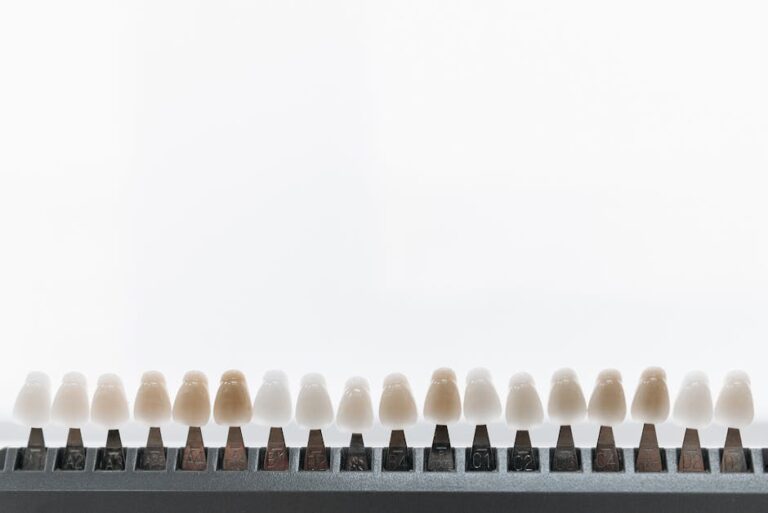
A critical clinical consideration is whether we are matching your restorations to your existing enamel or establishing an entirely new baseline color.
If you love your natural tooth color and only wish to repair localized wear, chips, or alignment issues, we can handcraft a smaller number of veneers that blend seamlessly into your arch. However, if your goal is a dramatically whiter smile, treating only a few front teeth can result in an unnatural contrast where the front teeth look noticeably brighter than the untreated teeth right beside them. In such cases, treating all the teeth visible within your natural smile line ensures a cohesive, stunning outcome. The American Dental Association explains that veneers are a conservative way to improve tooth color, shape, and alignment while preserving natural tooth structure.
Common Veneer Configurations and Tooth Counts
Every smile is distinct, which is why cosmetic dentists utilize different veneer configurations based on tooth exposure and desired changes. Understanding the types of dental veneers available and how different counts function allows you to choose the approach that best fits your goals.
| Veneer Count | Teeth Covered | Primary Clinical Purpose | Ideal Candidate |
|---|---|---|---|
| 2 Veneers | Central Incisors | Fixing isolated chips, uneven lengths, or central gaps | Patients happy with overall shade and side teeth |
| 4 Veneers | Centrals & Laterals | Correcting front asymmetry, minor crowding, or uniform wear | Narrower front display with well-aligned canines |
| 6 Veneers | Canine to Canine | Comprehensive front makeover | Narrow smile lines where premolars remain hidden |
| 8 Veneers | 1st Premolar to 1st Premolar | The gold standard full cosmetic transformation | Average to wide smiles revealing premolars |
| 10 Veneers | 2nd Premolar to 2nd Premolar | Seamless broad smile enhancement | Wide arches or high lip lines showing extensive side teeth |
| 14–20 Units | Dual-Arch Coverage | Complete aesthetic and functional reconstruction | Highly visible lower teeth, severe bite wear, or major color shifts |
Spot Treatments: When 2 or 4 Veneers Are Enough
You do not always need a full arch of restorations to make a noticeable aesthetic improvement. Spot treatments are highly effective for focused, localized adjustments:
- 2 Veneers: Placing restorations solely on the two upper central incisors is perfect for addressing localized trauma, chipping, or closing tooth gaps between the front teeth.
- 4 Veneers: Treating the two central and two lateral incisors corrects front-line asymmetry and minor rotation while creating an attractive, uniform shape across the most prominent teeth in your mouth.
Spot cases require expert artistic shading so that the porcelain seamlessly mirrors the natural translucency and tone of the neighboring canines.
The Standard Makeover: Deciding How Many Veneers Do I Need for a Full Smile with 6 vs. 8 Units
For most people pursuing a noticeable cosmetic upgrade, the decision often comes down to 6 versus 8 units.
- 6 Veneers (Canine to Canine): A six-unit restoration covers your central incisors, lateral incisors, and canines. This approach works well if you have a narrower facial structure and your premolars remain in shadow when you smile.
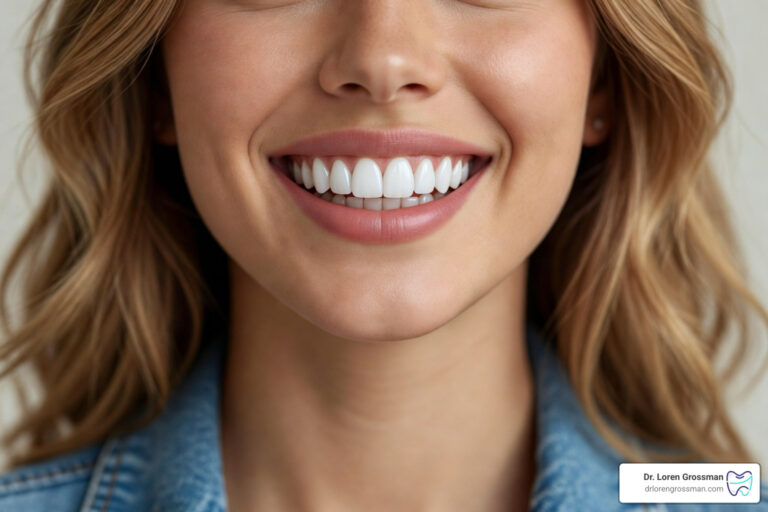
- 8 Veneers (Premolar to Premolar): Eight veneers represent the most common starting point for a full cosmetic makeover. By covering the first premolars behind the canines, an eight-unit plan avoids the “six-pack” effect—where six bright front teeth are abruptly flanked by darker, shadowed natural premolars.
Examining genuine veneer before and after transformations illustrates how including premolars creates a fluid, uninterrupted smile arc.
Wide Smiles and Full Arches: 10, 14, or Full Reconstruction
When patients have expansive smiles, treating 10 teeth on the upper arch (extending to the second premolars) ensures complete continuity from corner to corner. When laughing or turning in profile, no darker natural teeth are revealed.
For a balanced transformation across both arches, a popular combination involves 14 units—8 veneers across the upper teeth and 6 across the lower front teeth. Full-mouth treatments involving 16 to 20 units are typically reserved for full cosmetic and functional reconstructions where significant bite correction, severe enamel wear, or extensive acid erosion must be addressed across both arches simultaneously.
Upper vs. Lower Arches: Do You Need Bottom Veneers?
One of the most frequent questions we hear is whether you have to veneer your bottom teeth when improving your upper smile. In most cosmetic scenarios, treating the upper arch alone is entirely sufficient.
Upper teeth naturally dominate your aesthetic display when smiling and talking. Lower teeth, by contrast, are often partially concealed by your lower lip during a smile and generally become visible only during rapid speech or spontaneous laughter. Furthermore, lower incisors are smaller and bear significant dynamic chewing loads, meaning preserving natural tooth structure whenever possible is sound dental practice.
When Whitening Replaces Lower Veneers
For many patients, pairing upper veneers with professional whitening on the lower arch provides the ideal balance between beauty and conservative treatment.
This combination creates a unified, bright smile while saving substantial financial investment and leaving healthy lower enamel untouched. When balancing overall care and budget, comparing porcelain vs composite veneers can help you select the ideal materials for each arch.
Full Arch and Dual-Arch Considerations
Lower veneers become necessary under specific clinical circumstances:
- Prominent Lower Display: When speaking or smiling, some individuals naturally expose as much lower tooth structure as upper tooth structure.
- Severe Wear and Chipping: Bruxism (teeth grinding) can severely flatten or chip lower incisors, requiring porcelain restorations to restore lost vertical height and chewing function.
- Complex Occlusal Alignment: If your bite relationship requires re-alignment to ensure proper guidance and prevent upper porcelain fractures, placing restorations on both arches allows us to engineer a harmonious bite.
Cost Factors and Treatment Planning by Veneer Count
Because dental veneers are planned, fabricated, and placed on an individual tooth basis, treatment pricing scales directly with the number of units you receive. A 6-veneer treatment plan will naturally cost less than an 8- or 10-unit plan.
Understanding various cosmetic dentistry cost factors allows you to make informed decisions about your investment. Total costs reflect several variables:
- The number of individual teeth being prepared and restored
- The master dental ceramist and laboratory fees required for lifelike shading
- Any necessary adjunctive treatments, such as gum recontouring or preliminary whitening
For localized financial considerations, reviewing our guide on regional veneer pricing in Pennsylvania can help clarify what to expect during your personalized consultation.
Assessing Your Smile Before Your Consultation
Before visiting our Kingston office, you can perform a quick self-assessment at home to get a rough idea of your smile zone:
- The Mirror Test: Stand in good, natural lighting in front of a mirror. Relax your face, then transition into your natural everyday smile. Note which teeth are clearly visible.
- The Big Laugh: Laugh or smile as broadly as possible. Count how many upper teeth show toward the back corners, and observe how much of your lower teeth appear.
- Photo & Video Check: Take a quick selfie video while talking and laughing naturally. Video often reveals dynamic tooth display far more accurately than a posed still photo.
During your clinical visit, we utilize digital smile design techniques to map your exact proportions, ensuring that any conservative enamel preparation is minimized while achieving maximum cosmetic balance.
Frequently Asked Questions About Veneer Counts
Are 6 veneers enough for a natural-looking smile makeover?
Yes, 6 veneers can look completely natural if you have a narrower dental arch or if your side teeth naturally recede into shadow. The key to making a 6-veneer plan look seamless is precise shade matching, ensuring the transition from your veneered canines to your natural premolars appears soft and gradual rather than stark.
Why is 8 veneers considered the standard starting point?
Eight veneers is widely considered the standard starting point because it covers the six front teeth plus the first premolars on each side. For the majority of facial shapes, this spans the entire width of a broad smile, preventing any dark corners or visible shade discrepancies when smiling widely or speaking.
Is a full set of 20 veneers necessary for cosmetic goals?
A full set of 20 veneers is rarely necessary for purely cosmetic goals. In most cases, placing 20 veneers is considered cosmetic over-treatment unless a patient requires extensive full-mouth rehabilitation due to severe bite collapse, deep wear, acid erosion, or widespread structural damage across both arches.
Conclusion: Designing Your Custom Smile Transformation

Discovering the ideal number of veneers for your smile comes down to your personal anatomy, your aesthetic goals, and a commitment to preserving as much healthy, natural tooth structure as possible. Whether your perfect transformation calls for 4, 8, or 14 units, individualized planning ensures a radiant, confident result that feels comfortable and looks completely natural.
If you are ready to explore your options and see what is possible for your smile, we invite you to schedule a consultation with our experienced team to learn more about custom porcelain dental veneers designed specifically for you.