Why Regular Dental Checkups Matter for Your Health
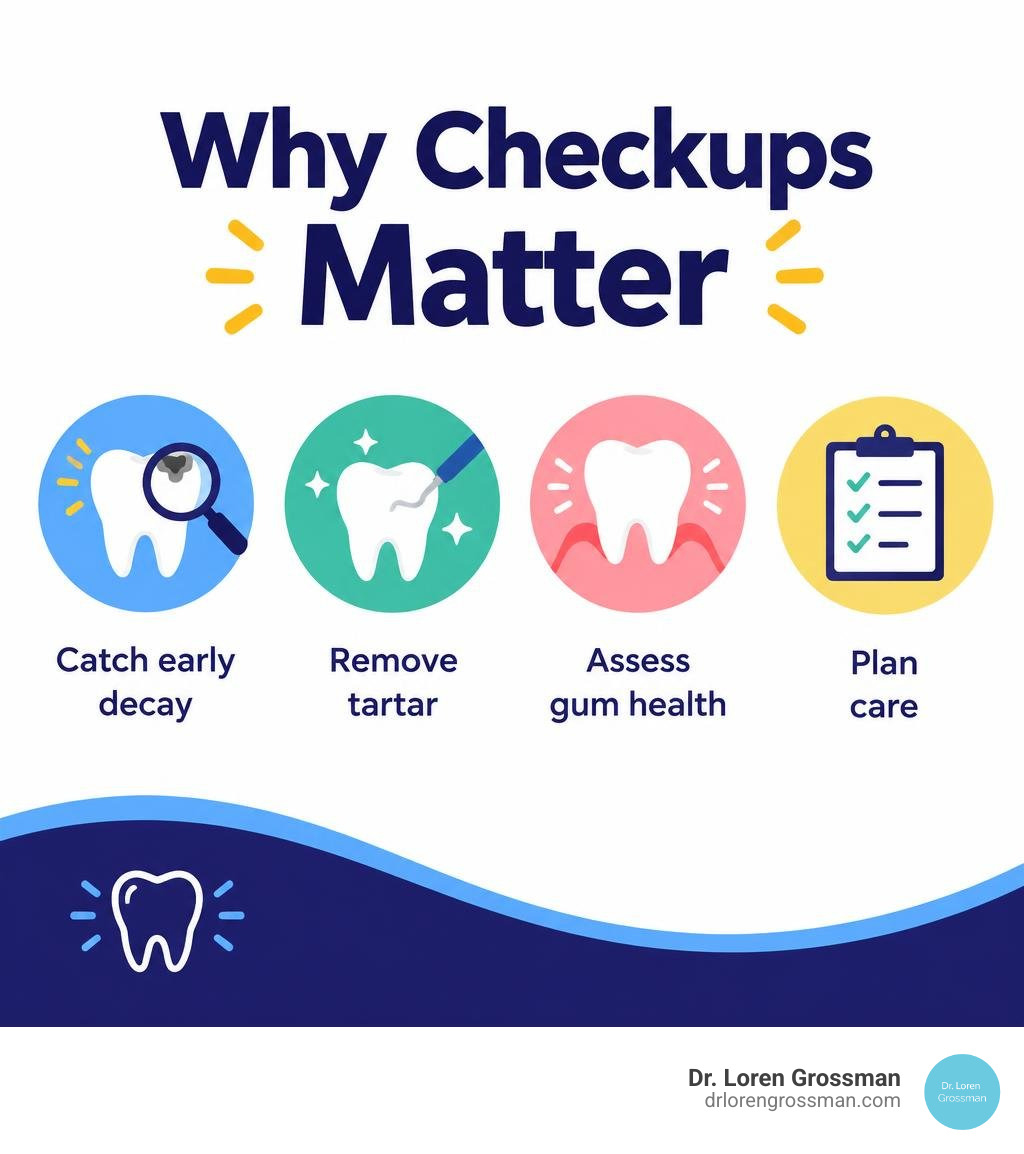
Here’s why regular dental checkups matter: they can catch tooth decay and gum disease before you feel pain. Professional cleanings remove hardened buildup that brushing cannot. An exam can also reveal changes in your mouth that need a closer look. Your dentist can help you decide how often to return based on your health and risk of dental problems.
I’m Dr. Loren Grossman, D.M.D., and I’ve cared for families in the Wyoming Valley since 1984. My work with patients of all ages has shown me why regular dental checkups matter: they give us a chance to act while problems are still small.
Why regular dental checkups matter word guide:
- how to prevent cavities in kids
- what age should kids start going to dentist
- dental anxiety tips for adults
The Systemic Health Connection: Why Regular Dental Checkups Matter Beyond Your Teeth
We often view dentistry through a narrow lens—a quick polish, a check for cavities, and a reminder to floss. However, the mouth does not exist in isolation from the rest of the body. In fact, it serves as an open window into your overall physical health.
When oral bacteria trigger chronic inflammation in the gums, that localized infection does not stay confined to your jawline. Microbes and inflammatory byproducts can enter the bloodstream, traveling through vessels and triggering systemic inflammation that strains other vital organs. As detailed in Harvard Health insights on detecting systemic conditions, more than 100 medical conditions can produce visible signs in the oral cavity, positioning routine dental visits as a crucial first line of defense for whole-body wellness.
Early Detection of Silent Medical Conditions
Many severe medical conditions develop quietly, showing few obvious symptoms in their earliest stages. During a routine clinical evaluation, our trained eyes look well past surface enamel to identify subtle tissue anomalies that could indicate underlying systemic disorders:
- Oral Cancer: Head and neck cancers often start as small, painless white or red patches, non-healing sores, or minor tissue thickening. Identifying these abnormalities during a routine visual and physical screening drastically improves treatment success.
- Osteoporosis: Subtle loss of bone density in the jawbone, frequently spotted on routine digital dental radiographs, can provide an early signal of systemic bone thinning long before a bone fracture occurs elsewhere.
- Sleep Apnea and Airway Obstruction: Chronic tooth grinding (bruxism), scalloped tongue borders, an enlarged uvula, or a worn bite often indicate sleep-disordered breathing.
- Gastroesophageal Reflux Disease (GERD): Severe erosion on the inner surfaces of the upper teeth frequently points to silent nighttime acid reflux before patients even report heartburn.
Recognizing these critical warning signs of dental problems allows us to collaborate with your primary care physician to stop silent health threats in their tracks.
The Bidirectional Link Between Gum Disease and Chronic Illness
Periodontal (gum) disease is one of the most common chronic inflammatory conditions worldwide, affecting 46% of adults aged 45 to 64 and nearly 59% of adults aged 65 and older. The relationship between periodontal health and metabolic conditions like diabetes is strictly bidirectional.
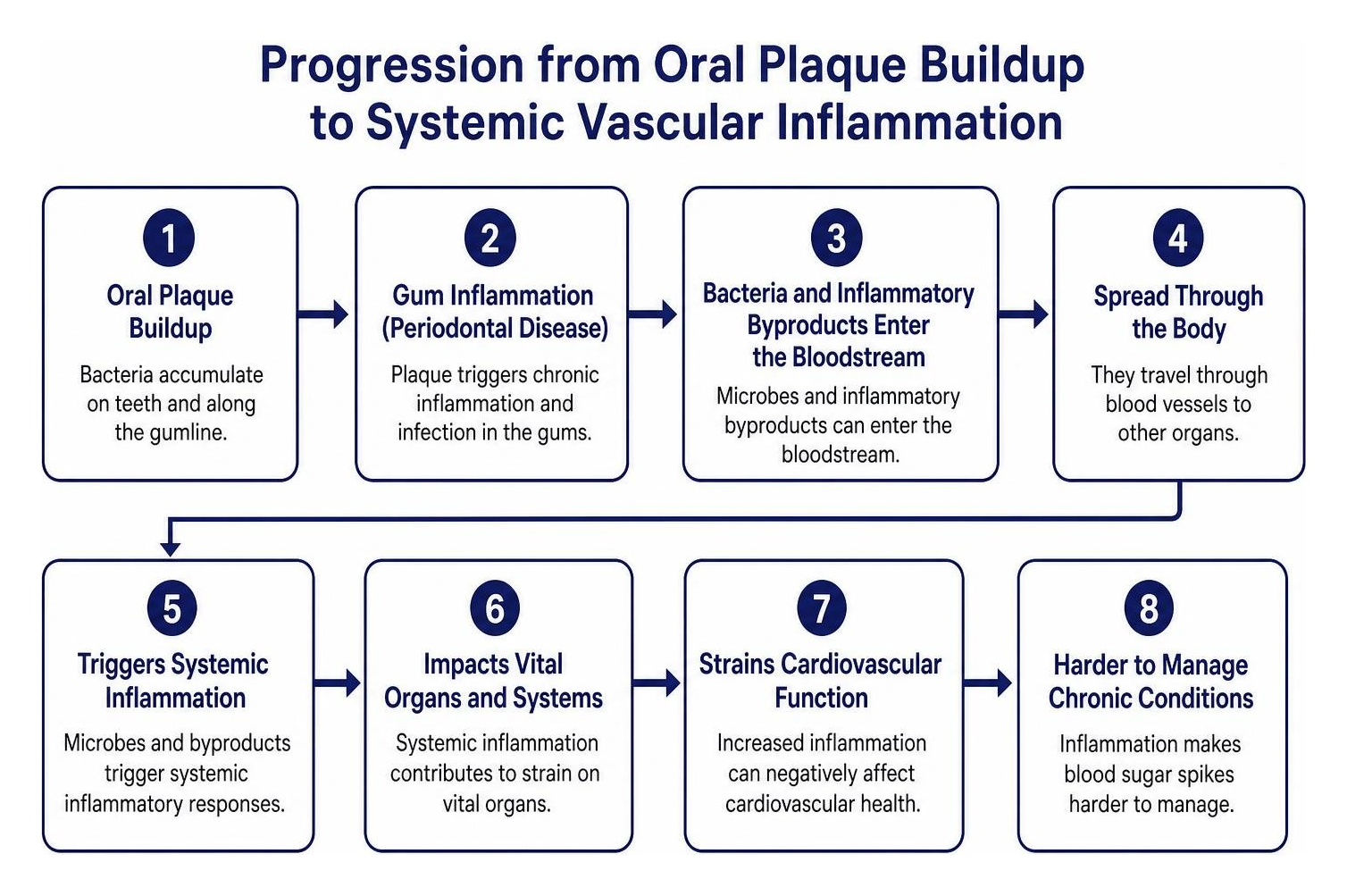
According to the CDC clinical guidance on diabetes and oral health, severe gum disease impairs glycemic control, making blood sugar spikes harder to manage. In fact, research shows that for every 1% increase in hemoglobin A1C levels, the odds of developing periodontitis jump by 18%. Conversely, treating active gum infections through targeted general dentistry treatments helps reduce systemic inflammatory markers, supporting healthier cardiovascular function and more stable blood sugar control.
Anatomy of a Preventative Visit: Inside a Comprehensive Exam and Cleaning
A preventative dental visit is a structured, multi-step health assessment designed to preserve healthy tissues and intercept structural breakdown.

When you sit in the dental chair, our team performs a meticulous evaluation that includes:
- Diagnostic Review: Updating your medical history, assessing medication changes, and taking necessary low-radiation digital imaging.
- Periodontal Charting: Measuring pocket depths between your teeth and gums to detect early gingivitis or sub-gingival bone loss.
- Oral Cancer and Soft Tissue Exam: Palpating the neck, jaw, cheeks, tongue, and throat for abnormal lumps or lesions.
- Calculus Removal (Scaling): Utilizing specialized ultrasonic and hand instruments to lift hardened tartar that standard brushing and flossing cannot dislodge.
- Polishing and Enamel Strengthening: Buffing away extrinsic surface stains and applying remineralizing agents to fortify enamel against acid wear.
Understanding these detailed dental checkup and cleaning steps helps demystify the visit and shows how each step protects your smile.
Professional Cleanings, Diagnostic X-Rays, and Preventative Therapies
Not every smile requires the exact same hygiene protocol. Matching your clinical condition to the right dental cleaning type ensures that healthy gums receive standard prophylaxis, while inflamed pockets benefit from therapeutic scaling and root planing.
Furthermore, academic institutions like the UCSF School of Dentistry emphasize that routine digital X-rays use minimal radiation while exposing interdental cavities, abscesses, and root resorptions hidden beneath the gumline. To complement cleanings, we frequently administer preventative therapies such as:
- Fluoride Varnishes: Concentrated mineral applications that rebuild weakened enamel and desensitize exposed roots.
- Dental Sealants: Thin, protective resin coatings applied to the deep grooves of molars to seal out cavity-causing bacteria.
Personalizing Visit Frequency Based on Individual Risk
While a biannual exam serves as a dependable standard for many patients, dental care is never one-size-fits-all. Determining your yearly dental visit frequency depends directly on individual risk factors such as smoking, genetics, pregnancy, dry mouth, or a history of rapid cavity formation.
As noted in the NHS guidelines on dental checkups, recall schedules should be risk-based, ranging anywhere from every three months for individuals managing active periodontitis to twelve months for low-risk patients with pristine oral histories.
Proactive Protection: Financial, Physical, and Psychological Advantages
Skipping dental visits might feel like a short-term money saver, but it almost always leads to steep financial and physical costs down the road. Dental issues do not self-resolve; an untreated microscopic enamel lesion inevitably burrows deeper into sensitive dentin and pulp tissue.
| Preventative Care Protocol | Emergency / Restorative Outcome If Ignored | Typical Impact & Recovery |
|---|---|---|
| Biannual Exam & Cleaning | Deep Periodontal Scaling / Surgery | Reverses early gingivitis vs. managing irreversible bone loss |
| Early Surface Filling | Root Canal Therapy & Full Dental Crown | 30-minute quick visit vs. multiple visits and higher expense |
| Preventative Sealant / Fluoride | Complex Multi-Surface Restoration | Painless preventative barrier vs. structural tooth drilling |
| Diagnostic Digital Radiograph | Emergency Tooth Extraction & Implant | Catching hidden decay early vs. surgical replacement of lost tooth |
Why Regular Dental Checkups Matter for Long-Term Financial Savings
Simple preventative appointments keep dental care predictable and budget-friendly. A small filling diagnosed early costs significantly less and takes far less time than an emergency root canal, crown buildup, or implant.
By applying smart preventive oral health strategies, patients maximize their annual dental insurance benefits—which typically cover preventative care at 100%—while avoiding complex, costly out-of-pocket restorative procedures.
Overcoming Dental Anxiety and Care Barriers
An estimated 15% of people worldwide experience dental anxiety, causing many to delay appointments until severe pain leaves them no choice. If clinical environments make you nervous, proactive communication is your greatest asset:
- Discuss Concerns Openly: Let your dental team know about your fears before treatment begins.
- Establish Stop Signals: Agree on a simple hand gesture to pause treatment whenever you need a breather.
- Sensory Distractions: Bring noise-canceling headphones to listen to calming music or your favorite podcast.
- Sedation Options: Ask about gentle sedation options, such as nitrous oxide, to ease physical tension.
For those facing financial constraints or lack of insurance, exploring community health centers, dental school clinics, or flexible in-house dental financing plans ensures essential care remains accessible.
Lifelong Smiles: Tailoring Preventative Care Across Every Age
Oral health needs evolve through every chapter of life, requiring specialized preventative strategies at each stage.

Why Regular Dental Checkups Matter from Childhood to Senior Years
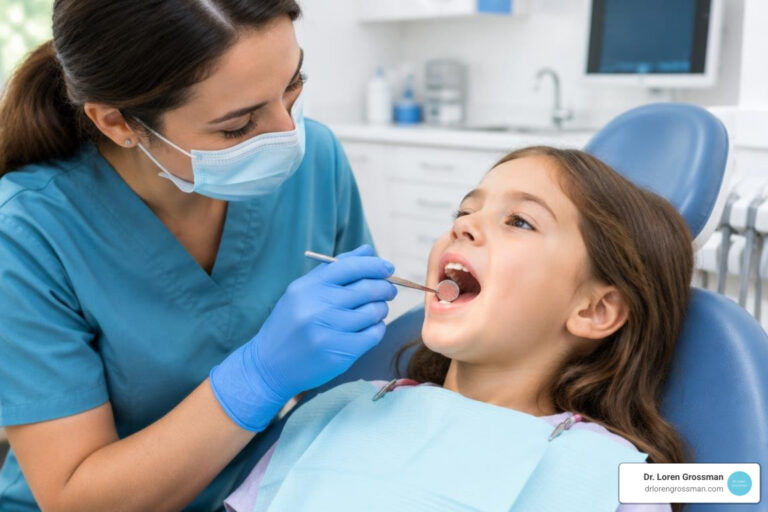
According to the Canadian Dental Association checkup recommendations, a child should have their first dental visit within six months of their first tooth erupting, or by their first birthday. Early visits allow us to monitor jaw development, evaluate enamel mineralization, and guide parents on cavity prevention before destructive decay takes hold. Partnering with a skilled family dentist in Kingston, PA establishes positive dental habits that last a lifetime.
As we move into our senior years, unique oral health challenges emerge:
- Dry Mouth (Xerostomia): Often caused by common prescription medications, a lack of saliva rapidly accelerates tooth decay along the gumline.
- Root Caries: Receding gums expose softer root surfaces that decay much faster than enamel.
- Restorative Maintenance: Aging crowns, bridges, and partial dentures require regular inspection to keep supporting teeth strong and functional.
Maintaining Daily Habits and Proactive Care Between Visits
What you do at home every day is just as critical as your professional checkups. Brushing twice daily with a soft-bristled toothbrush, cleaning between teeth daily using floss or interdental brushes, and limiting sugary, acidic snacks provide the foundation for lifelong dental health. Combining diligent daily habits with local insights on preventative dental checkups ensures your smile stays bright, strong, and disease-free year after year.
Frequently Asked Questions About Routine Dental Visits
How often should an individual with healthy teeth visit the dentist?
Most individuals with healthy teeth and gums benefit from visiting the dentist every six months for a routine exam and cleaning. However, your dentist will recommend a personalized visit schedule based on your specific oral hygiene, lifestyle habits, and medical risk factors.
Can routine dental visits detect serious systemic diseases like diabetes?
Yes. Chronic gum inflammation, delayed healing, dry mouth, and unexplained oral infections often point to uncontrolled blood sugar levels. Dentists frequently notice these signs and refer patients for comprehensive medical testing, helping catch conditions like diabetes early.
When should a child have their first dental checkup?
A child should visit the dentist by their first birthday or within six months after their first baby tooth erupts. Early visits help children get comfortable in the dental chair and allow the dentist to ensure proper facial, jaw, and enamel development.
Conclusion
Your smile is an irreplaceable asset, and keeping it healthy requires proactive care rather than reactive emergency repairs. Routine checkups do far more than keep your breath fresh and your teeth white—they protect your cardiovascular system, safeguard metabolic health, and prevent complex, expensive dental problems.
At the practice of Dr. Loren Grossman in Kingston, Pennsylvania, we combine advanced dental technology with compassionate, personalized care to help you achieve optimal oral wellness. Don’t wait for tooth pain to disrupt your life—explore our comprehensive dental care services today and schedule your next preventative visit to protect your health for years to come.