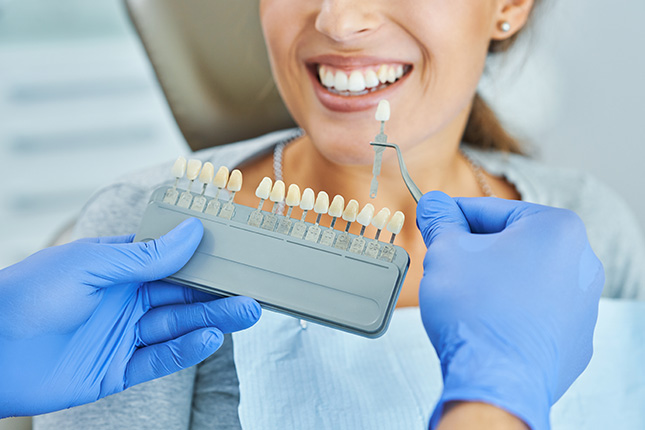
Why Natural-Looking Celebrity Veneers Are Making a Comeback
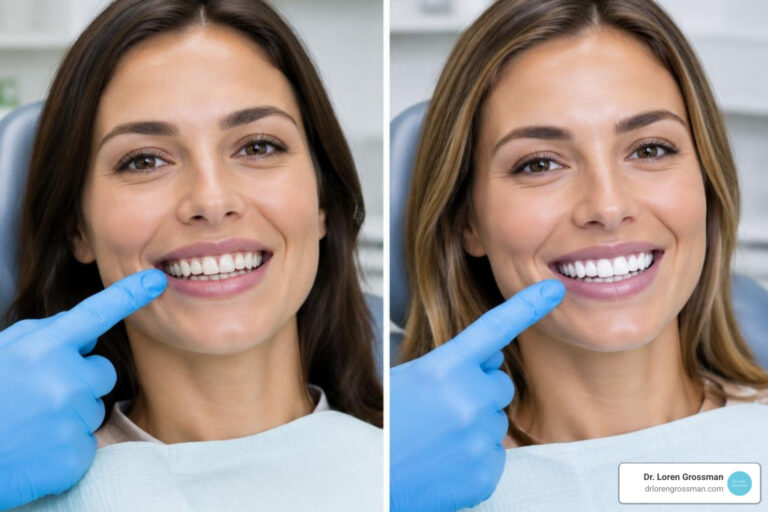
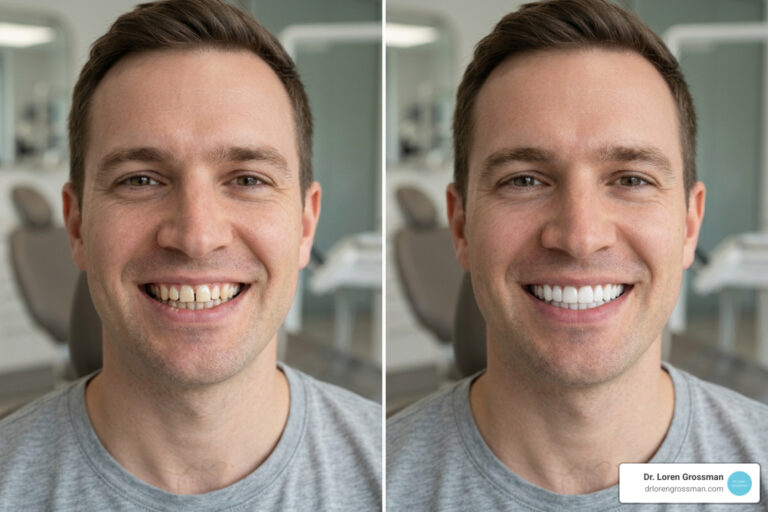
The celebrity veneer look is changing. Instead of the bright white, identical teeth often linked with a Hollywood smile, natural-looking veneers use subtle differences in shade, shape, and translucency. They are designed to fit a person’s face and smile, not make every tooth look the same.
That matters if you’re thinking about veneers yourself. Photos cannot tell you which celebrities have them, and copying someone else’s teeth may not suit yours. A better goal is a smile that looks like you on a great day.
I’m Dr. Loren Grossman, D.M.D., and I’ve provided smile makeovers in the Wyoming Valley since 1984, working hands-on with trusted dental labs. In this guide, you will see how modern veneers for celebrities look explained in plain terms, clarifying the design choices behind a believable result and the essential dental care that must come first.
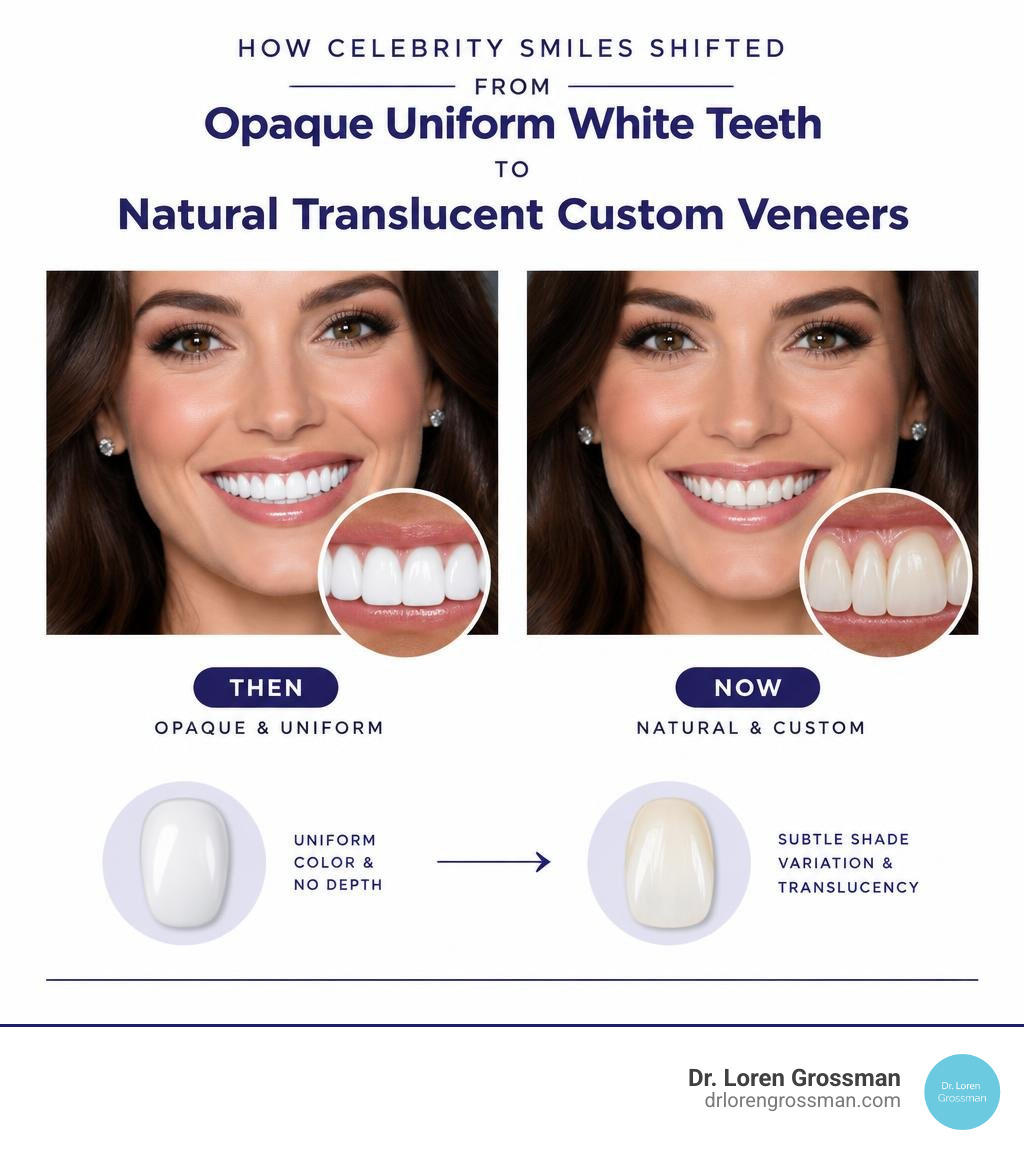
The Shift in Hollywood Aesthetics: The Look of Celebrity Veneers Explained
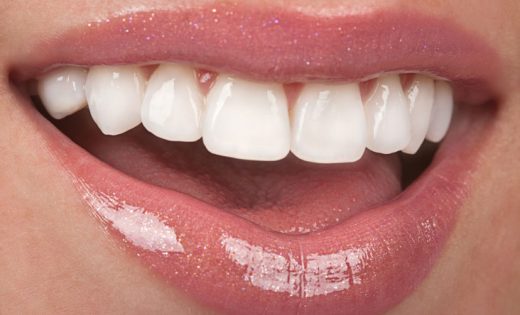
For decades, the standard for a red-carpet smile was simple: bright, symmetrical, and uniformly straight. Today, with veneers for celebrities, the look explained through modern cosmetic dentistry has fundamentally shifted from maximum brightness to anatomical realism. The human eye has developed a keen instinct for detecting artificial enhancements. When teeth lack depth or mimic a solid wall of chalk, our brains immediately recognize something artificial.
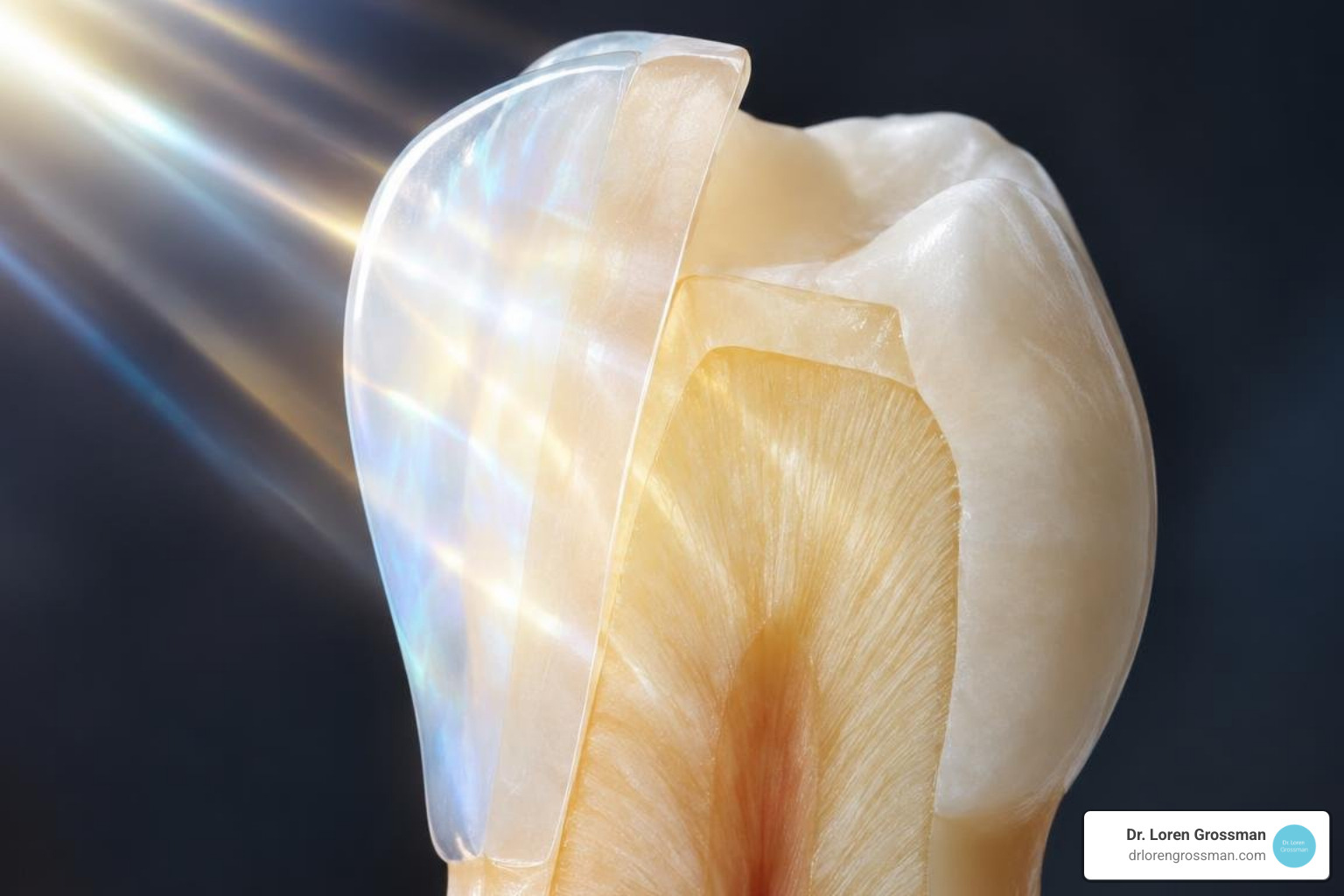
Modern cosmetic dentistry relies heavily on optical physics. A natural tooth is not an opaque block; it is a complex, multi-layered structure composed of a dense, yellowish inner dentin and a glass-like, semi-translucent outer enamel. When light hits a natural tooth, it penetrates the outer surface, scatters within the underlying dentin, and reflects outward. Replicating this optical behavior requires high-level artistry.
At our practice, achieving a natural smile makeover design involves precise dental shade mapping, nuanced incisal edge translucency, and surface micro-geometry that mimics the natural ripples and developmental grooves of genuine enamel.
From Hollywood Glamour to Overdone Fails
The history of red-carpet dental aesthetics began as early as the late 1920s, when Hollywood dentist Dr. Charles Pincus fashioned temporary acrylic covers for actors to wear during film shoots. These early prototypes were essentially movie props held on by temporary adhesive. As bonding technology progressed in the 1980s and 1990s, permanent cosmetic dentistry exploded, giving rise to the stereotypical “chiclet” smile.
These classic aesthetic failures generally suffered from three major design mistakes:
- Monochromatic opacity: Single-shade ceramic materials that reflected light flatly across the entire arch.
- Piano-key symmetry: Teeth fabricated with identical square shapes and uniform widths, eliminating the natural hierarchy between central incisors, lateral incisors, and canines.
- Lip-line disharmony: Over-contoured, excessively long shells that crowded the lower lip and disrupted natural speech patterns.
In recent years, viral social media trends highlighting aggressive dental tourism—frequently dubbed “Turkey Teeth”—have sparked a public backlash against overt dental work. When people see young influencers and stars undergo extreme tooth preparation only to receive glowing, unnatural restorations, they quickly realize that bigger and brighter is not better.
Analyzing public figures reveals this exact learning curve. Early on, some stars experienced veneers that were somewhat overly prominent, prompting later refinements toward softer contours and lifelike translucency. Similarly, public discussions surrounding subtle smile evolutions in Hollywood highlight how refined, conservative dentistry creates an elevated look without shouting for attention.
Modern Design Principles in Aesthetic Dentistry
Today’s premier aesthetic approach is known as “anti-detection dentistry.” The objective is to design restorations so seamlessly integrated with the patient’s facial architecture that an observer simply assumes they were born with exceptional genetics.
Achieving this standard requires several sub-millimeter design principles:
- Incisal Translucency: The biting edges of upper front teeth naturally contain very little dentin, making them semi-transparent. High-end restorations incorporate specialized clear ceramics along these edges to mimic this effect.
- Dynamic Light Reflection: Teeth are not flat mirrors. Incorporating subtle developmental depressions and micro-lobes ensures that camera flashes and direct sunlight scatter across the surface organically.
- Canine Convexity and Arch Harmony: Canines provide visual strength and support the corners of the mouth. They naturally carry slightly more chroma (warmth) and distinct curvature compared to the central incisors.
- Subtle Hue Variance: In a natural mouth, lateral incisors are slightly lighter and more delicate than central incisors. Uniformity across all ten upper teeth instantly signals artificial dental work.
The Science and Anatomy of High-End Veneer Engineering
Behind every flawless cosmetic transformation lies strict biological engineering. Dental veneers are ultra-thin shells—typically measuring between 0.3 mm and 0.8 mm in thickness—custom-crafted to bond permanently to the anterior surface of a tooth.
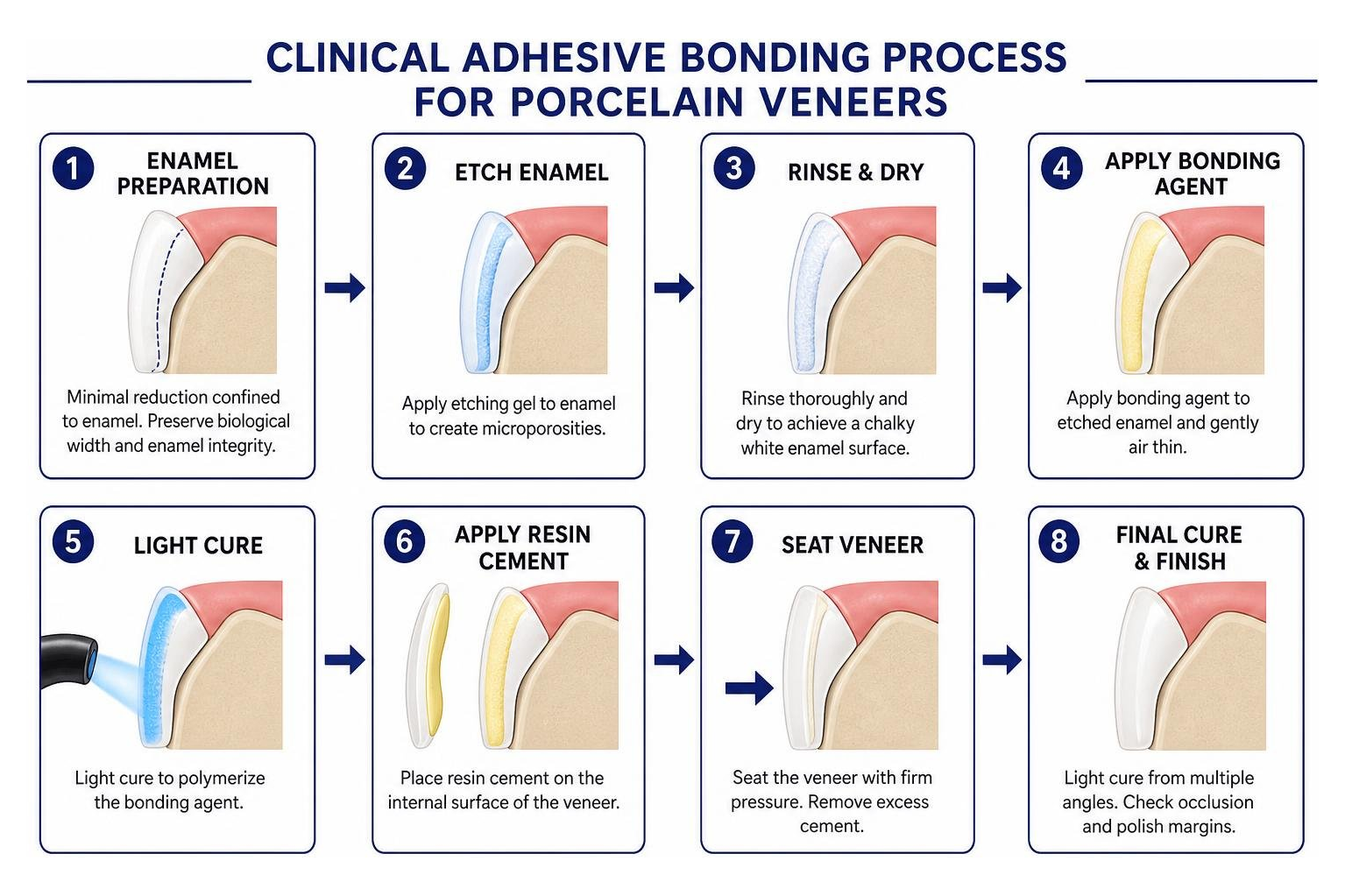
The long-term success of any veneer depends almost entirely on the quality of the adhesive bond. Clinical research confirms that porcelain restorations achieve their highest bond strength and longest survival rates when placed strictly within native tooth enamel (Peumans et al., 2000). Enamel provides an ideal, highly mineralized substrate for micromechanical resin bonding. If tooth preparation cuts too deep and enters the softer, organic dentin layer, the risk of microleakage, debonding, and postoperative sensitivity rises dramatically.
Furthermore, we must respect the biological width—the natural seal of gum tissue around the tooth neck. Placing veneer margins inappropriately deep beneath the gum line can trigger chronic inflammation, tissue recession, and bleeding. Understanding these underlying biological realities is essential when learning what to know about cosmetic dentistry.
Enamel Preparation and Preservation vs. Full Crowns
A common source of confusion for patients is the difference between a dental veneer and a full dental crown.
- Dental Veneers: Conservative restorations covering only the facial (front) surface and biting edge of the tooth. Enamel reduction is minimal—typically shaving just 0.3 mm to 0.7 mm of superficial structure.
- Dental Crowns: Structural “caps” that encase all 360 degrees of the tooth. Crown preparations require removing 1.5 mm to 2.0 mm or more of tooth structure around the entire circumference.
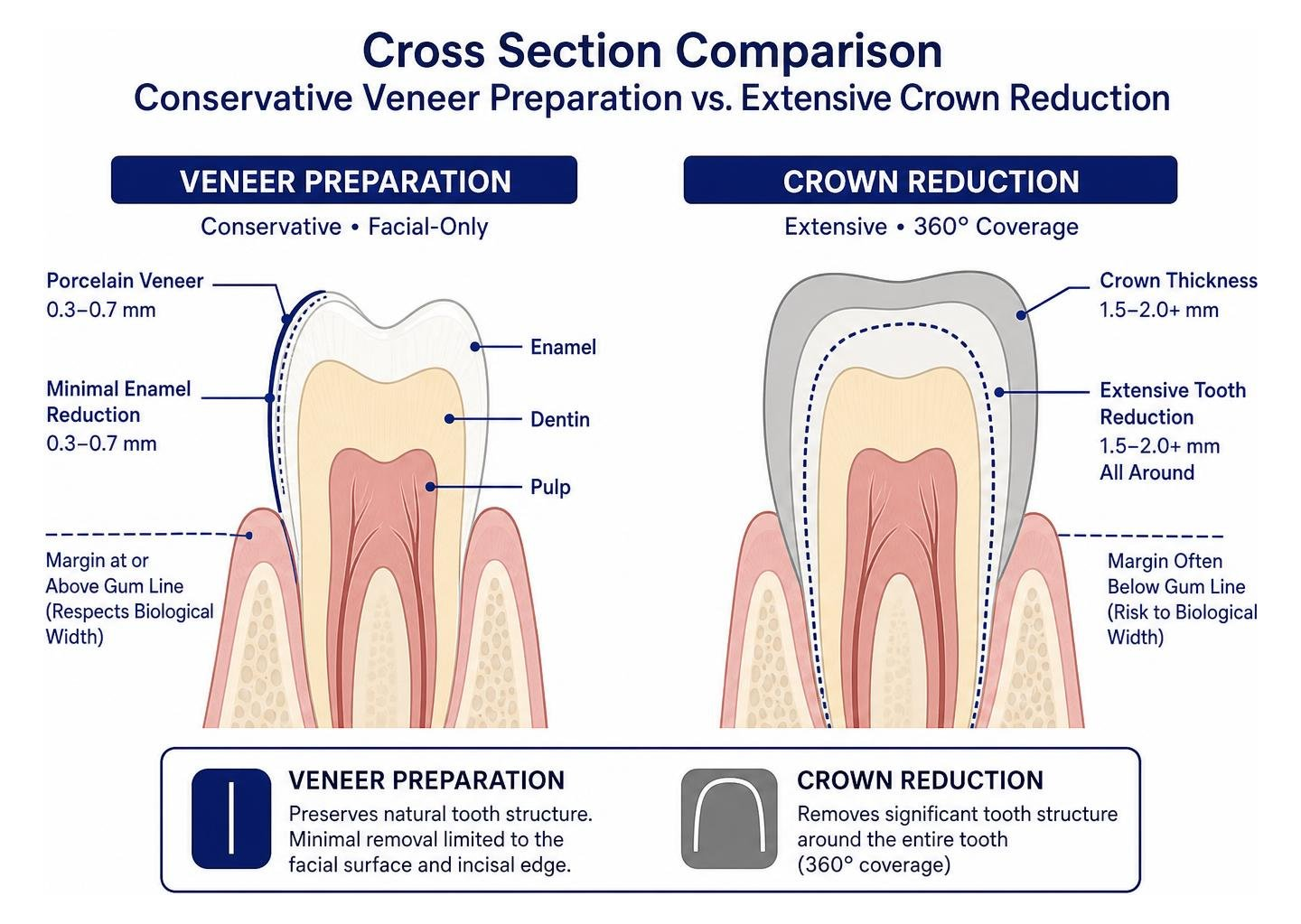
Crowns are indispensable for restoring severely broken, decayed, or root-canal-treated teeth. However, using full crowns on healthy, intact front teeth purely for aesthetic reasons removes unnecessary amounts of vital tooth structure and risks nerve trauma.
When planning aesthetic treatments, our philosophy centers on minimizing enamel removal during prep. In cases where teeth are small, lingually tilted, or have minor gaps, we can often explore no-prep veneer alternatives, adding porcelain without altering the underlying tooth structure.
Material Selection: Porcelain, Composite, and No-Prep Options
Choosing the right restorative medium requires balancing durability, optical quality, prep invasiveness, and budget. When reviewing options, patients benefit from understanding different veneer types before making a lifelong commitment.
| Feature | Porcelain Veneers (e.g., E.max / Feldspathic) | Direct Composite Resin Veneers | Minimal-Prep / No-Prep (e.g., Lumineers) |
|---|---|---|---|
| Material Base | High-strength laboratory-fired glass ceramic | Chairside acrylic resin with silica filler | Ultra-thin pressed porcelain (approx. 0.2–0.3 mm) |
| Typical Lifespan | 10 to 20+ years | 5 to 7 years (requires periodic polishing) | 10 to 15 years |
| Enamel Reduction | Conservative (0.3 mm – 0.7 mm) | None to minimal | None to micro-contouring |
| Stain Resistance | Exceptional (impermeable glazed surface) | Moderate (susceptible to surface staining) | Exceptional |
| Aesthetic Depth | Outstanding multi-layer translucency | Good, but can appear more opaque over time | Good, though can look bulky if misapplied |
| Average Cost Range | $1,000 – $3,500+ per tooth | $250 – $1,500 per tooth | $900 – $2,500 per tooth |
Feldspathic porcelain represents the gold standard for custom aesthetic work because master ceramists can paint and bake individual powder layers by hand. Lithium disilicate (IPS e.max) offers exceptional physical strength, making it ideal for patients with tighter bite relationships. Direct composite resin, while budget-friendly and reversible, has a shorter functional lifespan (typically four to seven years) and requires regular maintenance to prevent dulling.
Case Studies in Red-Carpet Transformations: Lessons in Timing and Artistry
Modern high-definition filmmaking, 4K digital broadcasting, and high-resolution smartphone cameras have changed how smiles are scrutinized. A set of teeth that looked passable under low-resolution lighting in the 1990s can look artificial under modern HDR cameras.

Contemporary smile designers analyze visual harmony across multiple lighting environments. Paparazzi flash photography directly flattens dental planes, while ambient studio lighting reveals depth and warmth. Creating restorations that look authentic in both environments requires studying real-world smile dynamics.
Age, Facial Development, and Long-Term Commitments
A critical ethical consideration in modern aesthetic dentistry is patient age. When high-profile young stars make drastic cosmetic changes, it sets a powerful cultural trend, as analyzed in public discussions regarding the timing and long-term implications of getting veneers at a young age. However, undergoing major cosmetic dentistry too early carries long-term consequences.
Before placing permanent veneers, the patient’s skeletal jaw growth and gingival margins must be fully mature. If veneers are placed while the facial bones and gums are still developing, the gumline can recede over time, exposing dark restoration margins.
Furthermore, every prospective patient must understand the maintenance timeline:
- Porcelain veneers typically last 10 to 20 years with meticulous care.
- Over a 10-year period, clinical data indicates approximately 50% of restorations may eventually require maintenance, re-bonding, or replacement due to micro-wear, minor chips, or natural gum changes.
- A patient receiving veneers at age 18 will likely require three to five full replacements over their lifetime. Each replacement cycle can involve minor additional tooth shaping.
Understanding these lifelong commitments is essential when evaluating veneer risks and side effects before any enamel is prepped.
The Anti-Detection Aesthetic in Modern Media
The most celebrated modern transformations intentionally preserve character. A prime example is the ongoing discussion surrounding subtle smile evolutions in young Hollywood. These smiles exemplify modern dental subtlety: rather than presenting as an overt, hyper-symmetrical cosmetic makeover, they maintain organic proportions, believable enamel translucency, and natural alignment that harmonizes with facial structure.
Modern cosmetic dentistry does not seek to erase character. It refines it. By preserving subtle rotations, respecting natural embrasure spaces (the tiny triangular gaps between tooth tips), and carefully selecting warmth rather than stark bleach shades, we achieve smiles that look naturally stunning. For an in-depth breakdown of these principles, explore our comprehensive dental veneers guide 2026 and view real clinical outcomes in our before and after cosmetic gallery.
The Step-by-Step Pathway to a Red-Carpet Smile
Achieving an exceptional, natural-looking transformation involves a meticulous, collaborative clinical process, as outlined in our step-by-step veneer procedure guide.
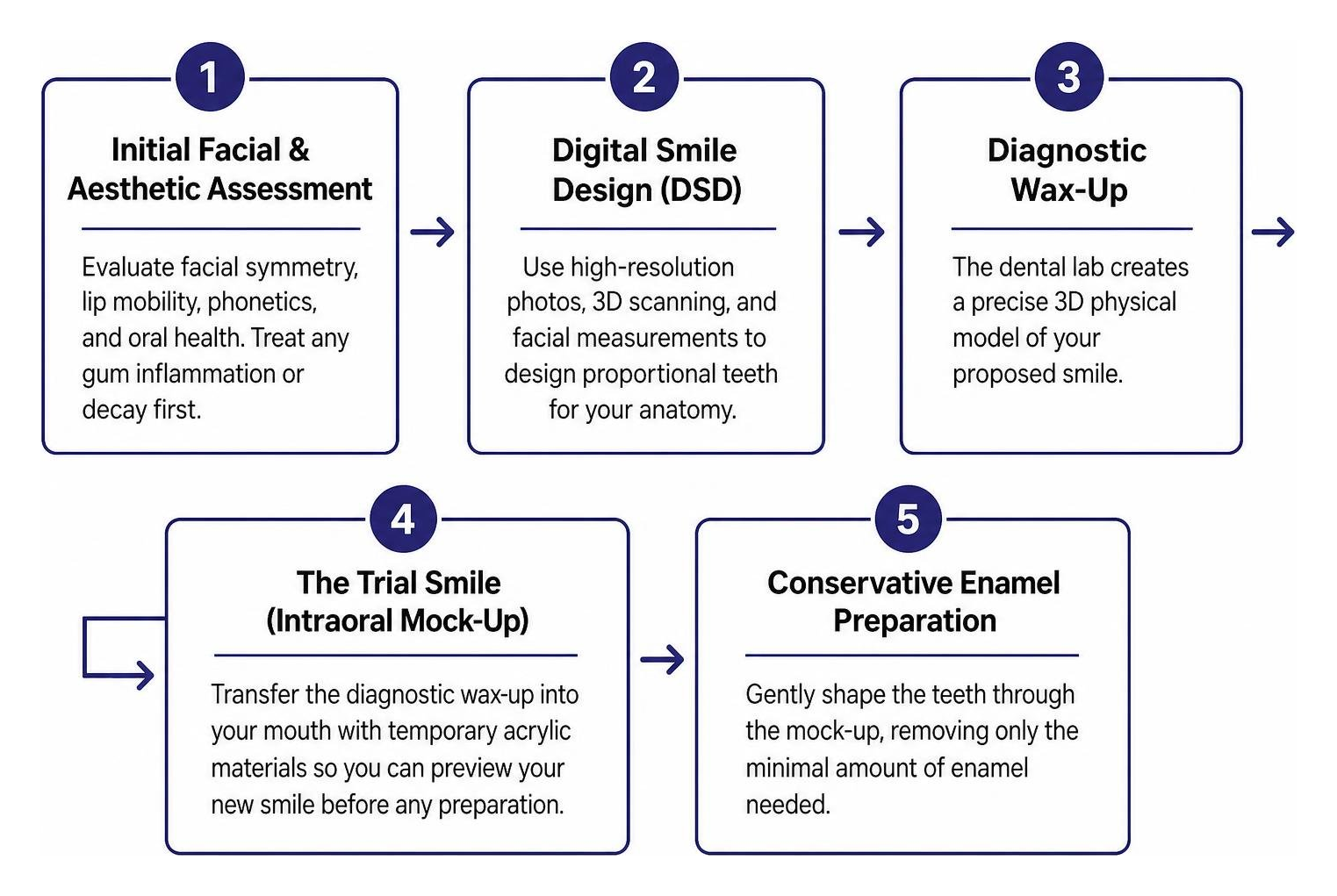
- Initial Facial & Aesthetic Assessment: We evaluate your facial symmetry, lip mobility, phonetics, and baseline oral health. Any existing gum inflammation or decay must be treated before cosmetic procedures begin.
- Digital Smile Design (DSD): High-resolution photography, intraoral 3D scanning, and facial measurements allow us to design proportional teeth tailored to your unique anatomy.
- Diagnostic Wax-Up: Our dental laboratory creates a precise 3D physical model of your proposed smile.
- The Trial Smile (Intraoral Mock-Up): We transfer the diagnostic wax-up directly into your mouth using temporary acrylic materials, allowing you to preview your new smile before any preparation occurs.
- Conservative Enamel Preparation: We gently shape the teeth through the mock-up, ensuring we remove only the minimal amount of enamel needed.
- Temporary Restorations: High-grade temporaries protect your prepped teeth and let you evaluate your bite, speech, and look for several days.
- Master Ceramist Fabrication: The dental ceramist hand-layers porcelain powders, baking and refining each veneer individually.
- Try-In & Adhesive Bonding: We test the fit, check shade with water-soluble try-in pastes, and permanently bond the veneers using light-cured resin cements.
- Final Bite Optimization & Follow-Up: We refine your bite and polish all margins to ensure maximum comfort and longevity.
The Crucial Trial Smile and Digital Smile Design
The single most critical safeguard against an unsatisfactory cosmetic result is the trial smile.
Skipping this step is why some patients end up with bulky, uncomfortable, or unnatural teeth. During a trial smile, temporary resin is applied directly over your unprepared teeth. You can walk up to a mirror, speak, smile, and assess the proposed tooth length, shape, and lip support.
This stage lets us test phonetics—ensuring your upper teeth lightly touch your lower wet-dry lip line when pronouncing “F” and “V” sounds, and verifying clear “S” sounds without a lisp. We can make immediate adjustments until both you and our team are completely satisfied, as outlined in our breakdown of the custom veneer process in seven easy steps.
Longevity, Maintenance, and Real Investment Costs
Investing in high-end cosmetic dentistry requires understanding both upfront costs and daily care. In 2026, pricing reflects the high degree of skill, laboratory time, and custom materials involved:
- National Averages: A single porcelain veneer typically ranges from $1,000 to $2,500.
- Master Ceramist / Celebrity-Grade Veneers: Custom, multi-layered ceramist restorations generally cost $2,000 to $3,500+ per tooth.
- Full Smile Makeovers: A typical upper smile zone transformation involves 8 to 10 teeth, averaging $12,000 to $25,000+ nationally.
Because veneers are classified as elective cosmetic procedures, they are almost never covered by dental insurance unless placed to repair trauma or replace failed structural restorations. For detailed local budgeting, consult our cosmetic dentistry cost guide and our breakdown of veneers cost factors.
Protecting your investment over the long term comes down to diligent maintenance and following practical guidance on how to care for dental veneers:
- Wear a Custom Night Guard: Bruxism (teeth grinding) is the primary cause of porcelain chipping and debonding. A custom night guard protects your restorations while you sleep.
- Use Non-Abrasive Toothpastes: Highly abrasive whitening toothpastes containing baking soda or harsh silica can scratch the ceramic glaze over time. Stick to gentle, fluoride-rich formulas.
- Never Use Teeth as Tools: Avoid biting hard objects, tearing open packaging, or chewing ice with veneered teeth.
- Maintain Regular Hygiene Visits: While porcelain cannot decay, the natural tooth structure underneath and at the margins remains vulnerable to plaque buildup and cavities.
Frequently Asked Questions About Celebrity Veneers
Why do some celebrity veneers look obviously fake?
Veneers look visibly fake when they are fabricated as opaque, monochromatic blocks of ceramic with excessive bleach-white coloring (often called the “BL1” toilet-bowl effect). They also look artificial when made too long, too thick, or with straight, uniform edges that lack natural embrasure gaps, individual tooth proportions, and surface micro-texture.
Can you reverse veneers once your natural enamel is prepped?
No. Traditional porcelain veneers are an irreversible procedure because a small layer of enamel (typically 0.3 mm to 0.7 mm) is shaved away to create space for the ceramic shell. Once enamel is removed, that tooth will always require a restoration (either a veneer or a crown) to remain protected and functional. Only true “no-prep” veneers placed over completely unaltered teeth can theoretically be removed without replacement.
How much does a full celebrity-style veneer makeover cost in 2026?
A full celebrity-style smile makeover covering the visible upper smile zone (usually 8 to 10 teeth) generally ranges from $12,000 to $25,000 nationally, with high-end master ceramist work running between $20,000 and $35,000+. A complete full-mouth makeover involving 16 to 20 upper and lower teeth can cost between $35,000 and $50,000+.
Conclusion
The era of one-size-fits-all, stark-white dental work is behind us. Today, true luxury in cosmetic dentistry is defined by subtlety, biological conservation, and personalized design that complements your natural features. A stunning smile should reflect who you are—radiant, balanced, and completely authentic.
If you are ready to explore your options, we invite you to schedule your custom dental veneer consultation with our team in Kingston, Pennsylvania. Let’s work together to design a smile you will love sharing with the world.
References
Peumans M, Van Meerbeek B, Lambrechts P, Vanherle G. “Porcelain veneers: a review of the literature..” Journal of dentistry, 2000. PMID 10709338.